Referral pathways are structured processes that guide how patients move through a healthcare system. They determine how and when a patient is transferred from one level of care to another, typically from a generalist to a specialist. While often perceived as administrative, referral pathways are central to safe, efficient, and coordinated clinical care. They ensure that patients are directed to the appropriate expertise based on clinical need.
Healthcare systems are designed in layers to manage complexity. Not every patient requires specialist input, and not every condition needs advanced intervention. Referral pathways allow primary care services to act as a filter, ensuring that specialist resources are used appropriately. This improves efficiency, reduces unnecessary interventions, and helps maintain system sustainability.
At a clinical level, referral pathways exist to match patient needs with clinical expertise. At a system level, they help manage demand, allocate resources, and standardise care delivery.

Primary care, most commonly delivered through general practitioners (GPs) in the UK, is the first point of contact for most patients. GPs assess symptoms, manage common conditions, and determine whether further investigation or specialist input is required.
This gatekeeping role is critical. It ensures that referrals are clinically justified and that patients entering secondary care have already undergone an appropriate initial assessment. It also allows many conditions to be managed effectively without escalation, reducing pressure on specialist services.
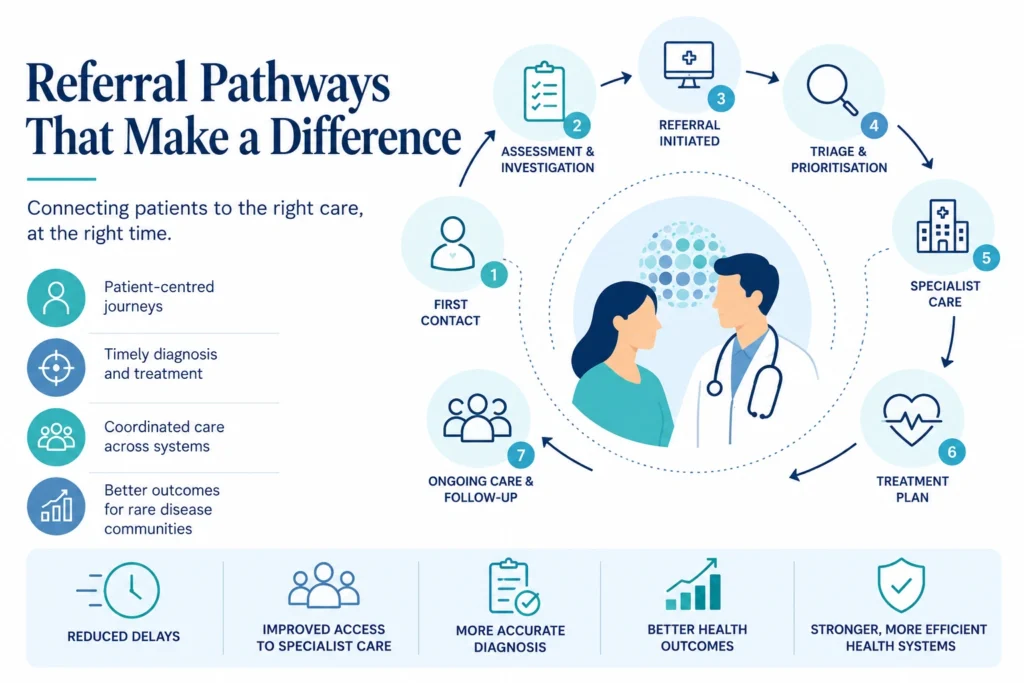
A referral begins when a clinician determines that a patient requires input beyond their scope of practice. This decision is based on clinical judgement, supported by guidelines, investigation results, and patient factors.
The referral is usually submitted electronically through systems such as the NHS e-Referral Service. It includes key clinical details, the reason for referral, and any relevant test results. The clarity and completeness of this information are essential, as they directly influence how the referral is handled.
The referral document is not simply a formality. It is the primary communication tool between the referring clinician and the receiving service. Poor-quality referrals can lead to delays, inappropriate triage, or duplication of investigations.
High-quality referrals are concise but comprehensive. They clearly state the clinical question, summarise relevant history, and include all necessary supporting information. In effect, they frame the patient’s case for the next stage of care.
Once received, referrals are reviewed through a triage process. This involves assessing the urgency and appropriateness of the referral. Clinicians or trained triage teams categorise referrals into priority levels, such as urgent, routine, or advice-only.
For example, suspected cancer cases are often placed on accelerated pathways to ensure rapid assessment. Conversely, non-urgent referrals may be scheduled based on service capacity and clinical need.
Triage ensures that limited specialist resources are directed towards patients who need them most urgently.
Following triage, patients are allocated to the appropriate service. This may involve outpatient clinics, diagnostic services, or specialist centres. At this stage, the patient transitions from primary care into secondary or tertiary care.
Specialists conduct further evaluation, which may include advanced imaging, specialised testing, or multidisciplinary assessment. A diagnosis is confirmed or refined, and a management plan is developed.
Referral pathways are rarely linear. Patients often move between different levels of care depending on their condition and treatment needs.
In many cases, care is shared between primary and secondary services. A specialist may initiate treatment, after which the GP takes over ongoing management. This shared care model allows patients to receive specialist input without requiring continuous specialist follow-up.
More complex cases may involve multiple referrals across different specialities, creating interconnected pathways rather than a single sequence.
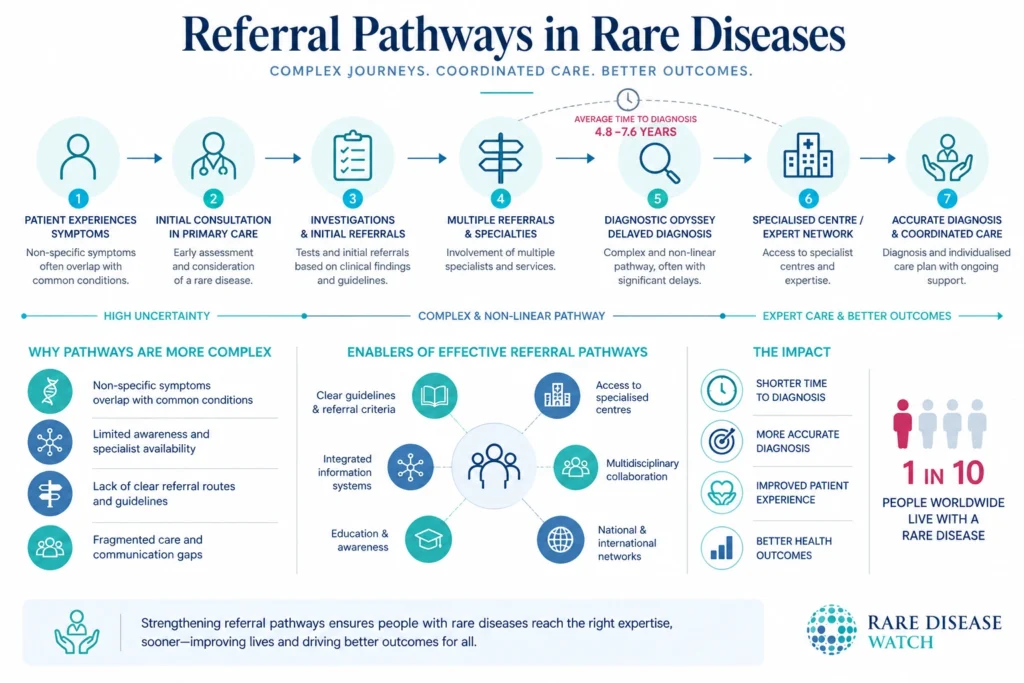
Referral pathways become significantly more complex in the context of rare diseases. Many rare conditions present with non-specific symptoms, making initial recognition difficult. As a result, patients may be referred multiple times across different specialities before a diagnosis is reached.
Unlike common conditions, where pathways are well established, rare diseases often lack clearly defined referral routes. This can lead to delays, misdiagnosis, and fragmented care.
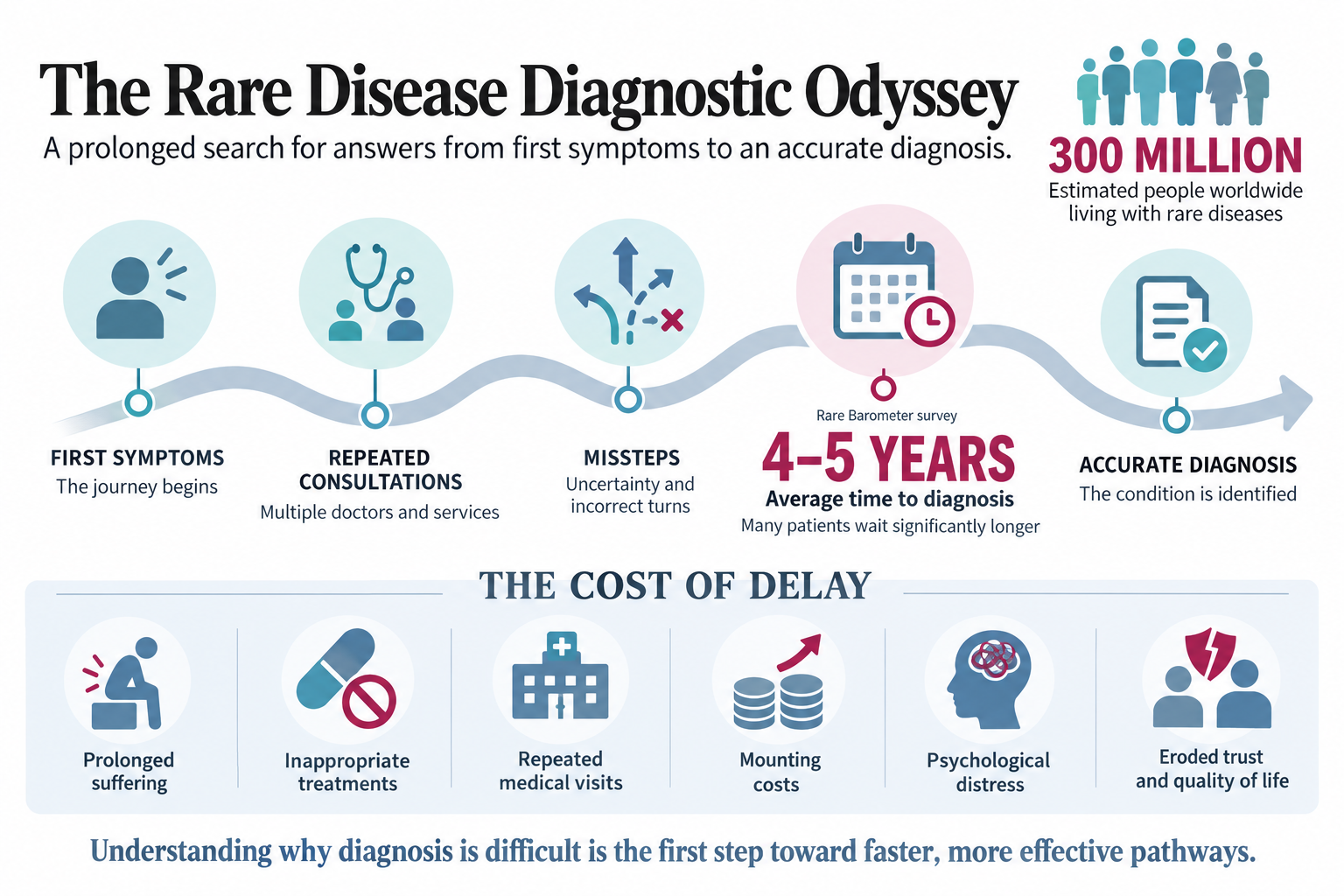
The term “diagnostic odyssey” is often used to describe the prolonged journey that many rare disease patients experience before receiving a diagnosis. This journey may involve years of consultations, repeated investigations, and multiple referrals.
The absence of clear pathways contributes to this complexity. Clinicians may not immediately recognise rare conditions, and patients may be passed between services without a definitive conclusion. This has both clinical and psychological implications, affecting outcomes and patient confidence in the system.
To address these challenges, specialised centres and networks have been developed. These centres concentrate expertise in specific conditions, providing more direct access to appropriate care.
In the UK and across Europe, initiatives such as centres of excellence and international collaborations aim to streamline referral pathways for rare and complex diseases. However, access to these centres depends on awareness among clinicians and appropriate referral mechanisms.
Referral pathways are influenced not only by clinical factors but also by system-level constraints. Waiting times, service capacity, and funding structures all affect how quickly a patient progresses through the pathway.
In some cases, referrals may be redirected to alternative services, such as community-based care or virtual consultations, depending on availability. These variations can create inconsistencies in patient experience and outcomes.
Modern healthcare systems increasingly emphasise patient involvement. In the UK, patients may be offered a choice of providers and appointment times through digital referral systems.
While this can improve engagement and satisfaction, it also introduces complexity. Patients must navigate options and make decisions that may require a level of understanding of the healthcare system that is not always straightforward.
Effective communication is essential at every stage of the referral process. Information must flow accurately between clinicians, services, and patients to ensure continuity of care.
After a specialist consultation, feedback is typically provided to the referring clinician in the form of a clinic letter. This outlines findings, diagnoses, and management plans. Without clear communication, care can become fragmented, leading to duplication or gaps in treatment.
In complex cases, particularly those involving multiple conditions or specialities, multidisciplinary teams play a central role. These teams bring together clinicians from different disciplines to review cases and agree on a coordinated approach.
This model is particularly important in oncology, neurology, and rare diseases, where management often requires input from multiple specialists.
Digital transformation is reshaping referral pathways. Electronic systems improve the speed and accuracy of referrals, reduce administrative burden, and enable better tracking of patient journeys.
Decision-support tools can guide clinicians on appropriate referral criteria, while integrated health records allow information to be shared more effectively. For patients, digital systems can provide visibility of appointments and pathway progress.
Despite improvements, referral pathways face ongoing challenges. Variability in service provision, capacity constraints, and inconsistencies in referral quality can all affect efficiency.
Data fragmentation remains a significant issue, particularly when systems are not interoperable. This can limit the ability to share information and coordinate care effectively.
National guidelines, such as those produced by the National Institute for Health and Care Excellence (NICE), provide frameworks for referral pathways. These guidelines aim to standardise care and reduce variation.
However, implementation can vary depending on local resources and service configuration. This means that, in practice, referral pathways may differ across regions.
New approaches are being developed to improve referral pathways, particularly for complex and rare conditions. These include virtual consultations, specialist advice services for primary care, and direct access to diagnostic testing.
These innovations aim to reduce delays, improve access to expertise, and create more flexible pathways that reflect the realities of modern healthcare.
Referral pathways are not simply administrative processes. They directly influence patient outcomes, experience, and safety. Efficient pathways enable timely diagnosis and treatment, while poorly functioning pathways can lead to delays and missed opportunities for intervention.
For rare diseases, optimising referral pathways is particularly important. Clearer routes to specialist care can reduce the diagnostic odyssey and improve access to appropriate treatment.
Ultimately, referral pathways are a mechanism for navigating complexity within healthcare systems. When designed and implemented effectively, they ensure that patients receive the right care, at the right time, from the right clinician.