With over 7,000 known rare diseases affecting millions worldwide, the rare disease diagnosis journey represents a critical challenge in modern healthcare. Across global healthcare systems, identifying and diagnosing a rare disease continues to involve significant uncertainty, delay, and clinical complexity
The term "diagnostic odyssey" is commonly used to describe prolonged journey that patients and families navigate before receiving an accurate diagnosis. This journey can span multiple years, involve numerous specialists, and creates significant emotional and financial burdens for those seeking answers.
This article outlines the stages of the diagnosis process, examines the systemic barriers that contribute to prolonged diagnostic timelines, and highlights emerging solutions that may shorten the diagnostic odyssey. Understanding the typical diagnostic process can help raise awareness of the common barriers and facilitators that patients and families face when seeking a rare disease diagnosis.
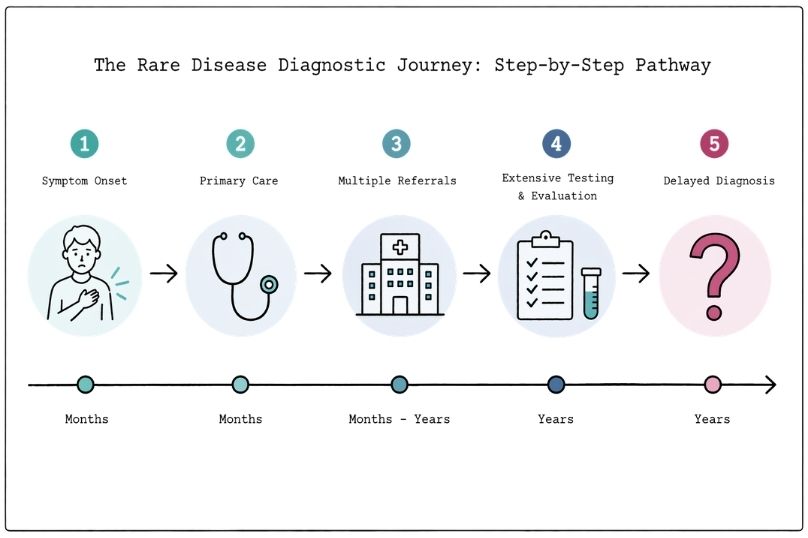
The diagnosis journey begins when patients begin to experience vague, episodic arrays of symptoms, often attributing them to major life stressors that may not lead to a rare condition. This causes them to seek medical advice from their primary healthcare providers.
Primary care physicians, while skilled in managing common medical conditions, face significant challenges when confronted with rare disease presentations. The rarity and heterogeneity of these conditions means that most primary care providers have limited experience with their specific manifestations, leading to multiple specialist referrals.
When primary care providers are unable to establish a clear diagnosis, patients are referred to a series of specialists for further evaluation. This stage often involves multiple consultations across different medical disciplines, with each clinician assessing the patient through the lens of their own expertise.
The central challenge at this point is the limited coordination among providers. Specialists typically focus on findings relevant to their field, rather than considering the patient’s presentation in a holistic manner. This fragmented approach can obscure important connections between symptoms and delay recognition of rare disease patterns.
As patients move through a constellation of specialists, they undergo numerous diagnostic tests, invasive procedures, and evaluations. Many of these tests may be redundant or misdirected.
Patients and families face the most significant financial and psychosocial consequences during this phase. The uncertainty continues to mount as test results return inconclusive or do not point towards a specific condition, leading to further referrals and additional testing cycles.
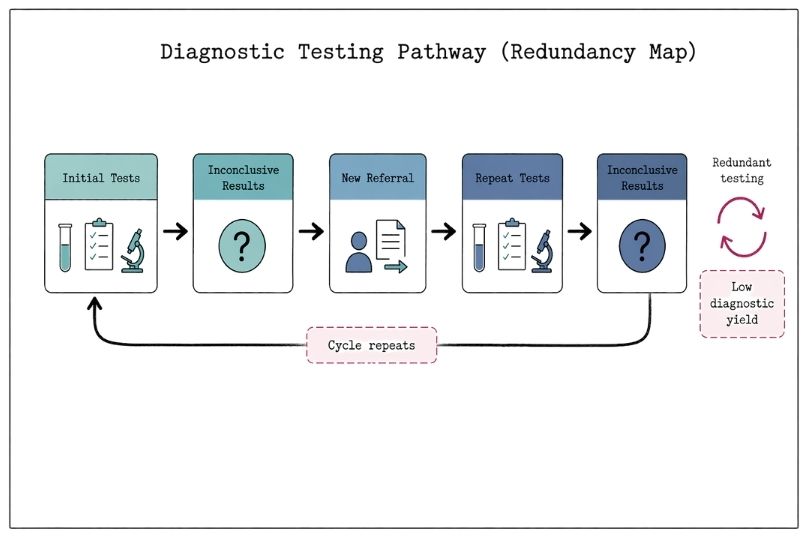
While the diagnosis process can be described in stages conceptually, lived experiences of navigating these stages reveal a far more complex and protracted reality. Several studies report that patients can take an average of 4-8 years to receive an accurate rare disease diagnosis.
During this extended period, patients typically consult with more than 7 different specialists, highlighting the fragmented nature of rare disease care. Each consultation represents not only time and expenses but also exacerbates the emotional toll of repeated tests and uncertainty.
This journey is characterized by numerous challenges, including misdiagnoses, delayed diagnoses, invasive investigations and inaccessible healthcare support. The burden experienced during this process is further compounded by the loss of social and economic opportunities that families must endure.
Beyond the structural stages of diagnosis, several systemic and scientific barriers further complicate timely identification of rare diseases.
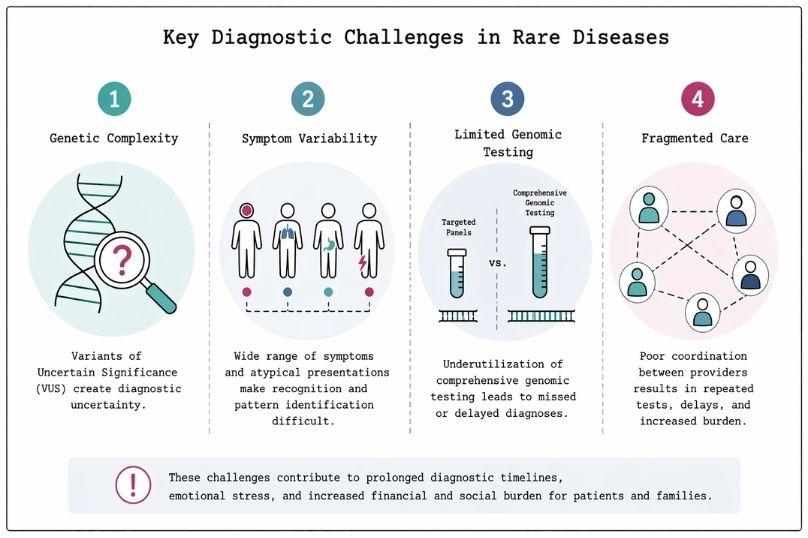
One of the most significant obstacles in rare disease diagnosis involves access to genetic testing and interpretation. When genetic tests identify variants of uncertain significance (VUS), both clinicians and patients find themselves in diagnostic limbo. This is because the genetic variations identified cannot be conclusively linked to a specific condition, leaving questions unanswered despite extensive testing.
While some uncertainties resolve over time as genetic knowledge expands, VUS results often extend the diagnostic timeline significantly. Families may wait months or years for additional research to clarify whether identified variants are the cause of their symptoms.
The clinical presentation of various rare diseases often do not match textbook descriptions, thus introducing additional diagnostic complexity. Some patients may exhibit atypical symptom patterns that do not often point towards a specific genetic cause.
Given that 80% of rare diseases have genetic causes distributed across more than 7,000 distinct conditions, this adds a layer of difficulty for healthcare professionals when it comes to identifying the correct diagnosis. In addition, the lack of education and awareness of rare diseases amongst healthcare professionals significantly contributes to the delay in receiving a diagnosis.
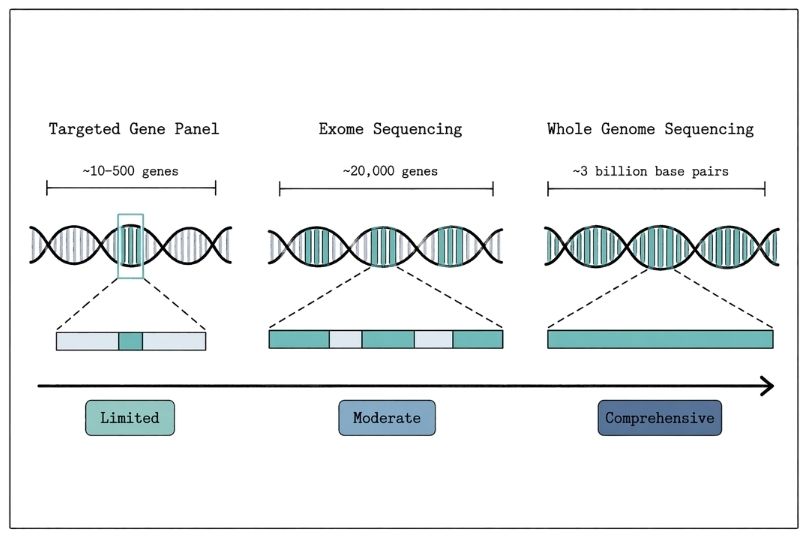
Despite mounting evidence supporting genetic testing for rare disease diagnosis, very few potentially affected individuals actually undergo genetic screening. When testing occurs, it often relies on low-resolution technologies like chromosomal microarray or targeted gene panels rather than comprehensive genomic analysis.
This conservative approach to genetic testing contributes to missed opportunities for early identification of rare conditions.
Despite these challenges, recent advances in genomic medicine and care coordination offer promising pathways to accelerate diagnosis.
Recent advances in genomic medicine highlight the potential for whole-genome sequencing (WGS) and whole-exome sequencing (WES) to dramatically accelerate diagnosis when implemented early in the clinical assessment process.
These technologies provide comprehensive DNA analysis that can identify rare variants across the entire genome rather than focusing on limited gene panels. While genomic tests can be costly, they can minimize the financial burden on patients and families by eliminating lengthy series of targeted tests and reducing hospital stays.
Given the advancements in genomic knowledge and technologies, the diagnostic yield has improved dramatically over the past decades.
Exome sequencing examines the entire coding region of the genome for abnormalities in the patient's genetic makeup. This generally non-invasive test requires genetic expertise for proper interpretation but can provide comprehensive genetic information early in the diagnostic process.
Healthcare advocates recommend that families pursue exome sequencing early in their diagnostic journey, even when physicians may initially be unfamiliar with the technology or hesitant to order comprehensive genetic testing.
Improved diagnostic outcomes require better coordination between healthcare providers and including rare diseases as a diagnostic consideration earlier in the process where possible. Connecting patients quickly to specialists familiar with genetic disorders can significantly reduce diagnostic timelines.
Multidisciplinary support is critical during the diagnostic process, and should include a comprehensive care plan and approach that includes appropriate mental health services.
Rare disease centers and specialized clinics offer concentrated expertise that can accelerate diagnosis and improve outcomes. These centers typically employ multidisciplinary teams familiar with rare disease presentations and have access to advanced diagnostic technologies.
Many specialist centers also participate in research networks that provide access to experimental diagnostic tools and connect patients with ongoing clinical trials and intervention studies relevant to their conditions.
The diagnostic odyssey creates substantial financial burden beyond direct medical costs. Families often face lost productivity from work, travel expenses for specialist appointments, all indirect costs that are typically not accounted for in typical cost of illness studies.
The psychological impacts of a delayed diagnosis can be overwhelming, families encounter a spectrum of emotions ranging from fear to relief during the diagnosis journey. Extended diagnostic timelines create stress, anxiety, and family strain while patients continue experiencing symptoms without clear explanations or access to treatment options.
Advances in genomic medicine, artificial intelligence, and diagnostic technologies offer promising pathways for reducing diagnostic delays. Improved clinician education about rare diseases, enhanced care coordination systems, and broader access to comprehensive genetic testing represent critical components of future diagnostic improvements.
The diagnostic odyssey remains a significant challenge for rare disease patients, but growing awareness among healthcare providers and advancing genomic technologies provide hope for substantially shortening the time to diagnosis and improving patient outcomes. As the medical community continues developing more efficient diagnostic pathways, the goal of reducing the average diagnostic timeline from years to months becomes increasingly achievable.
Early intervention with appropriate diagnostic tools, combined with coordinated specialist care and comprehensive genetic evaluation can help to address the challenges inherent in rare disease diagnosis.