Living with a rare disease often involves managing numerous appointments with multiple specialists, and repeatedly explaining your medical history across different hospitals or even cities. Juggling schedules and piecing together advice from various experts can feel exhausting, overwhelming, and fragmented. This is where multidisciplinary clinics for rare diseases come in, offering a better way. That brings all the necessary specialists together in one place, working as a single coordinated team to provide comprehensive, streamlined support that makes the journey less disjointed and reduces the burden on you and your family.
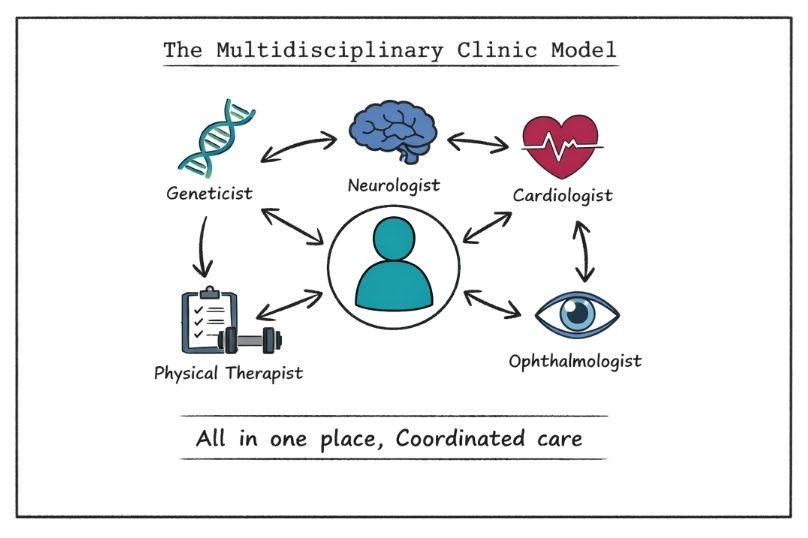
A multidisciplinary clinic for rare diseases is a specialized healthcare center where multiple medical experts from different fields work together as a single, coordinated team to diagnose and manage uncommon conditions. Instead of seeing specialists/doctors separately across different locations and appointments, you meet with several professionals who already know your case, communicate directly with one another, share notes and test results, and make treatment decisions collectively.
Depending on the specific rare disease, this team might include geneticists, neurologists, cardiologists, orthopedic surgeons, ophthalmologists, and other relevant specialists. The key difference from traditional healthcare is that these professionals work as an integrated team to help avoid gaps, reduce delays, and provide a clearer, more complete picture of your health.
Rare diseases present unique challenges that make traditional healthcare approaches less effective. With more than 7,000 known rare diseases affecting approximately 400 million people worldwide, most doctors encounter only a handful of cases throughout their entire careers. This limited exposure makes it difficult for any single specialist to develop deep expertise or recognise important patterns.
Many rare diseases are complex, often affecting multiple body systems. For example, a genetic condition might impact the heart, nervous system, bones, and eyes simultaneously. No single specialist can address all these interconnected issues effectively, and when doctors work in isolation, important connections between symptoms or systems can be overlooked. Multidisciplinary clinics solve these problems by bringing together experts from different fields who collaborate closely.
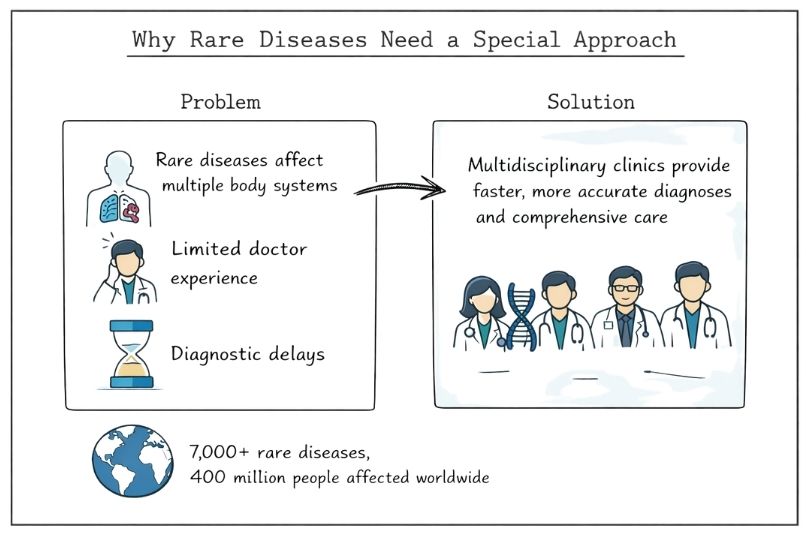
Research shows that multidisciplinary teams can achieve definitive diagnosis rates of up to 67% in patients who had remained undiagnosed for years, a significant improvement compared with traditional approaches, where patients often wait years for clarity. By combining expertise across specialties, these teams provide patients with faster, more accurate answers, leading to better treatment options and less uncertainty.
The specific makeup of a multidisciplinary team varies depending on the rare disease being treated, but it typically includes core specialists relevant to the condition. For neurological rare diseases, for example, teams often include pediatric and adult neurologists, neurosurgeons, geneticists, radiologists, and physical therapists. This breadth of expertise ensures that all aspects of a complex condition are addressed in one coordinated setting.
Many successful clinics rely on regular, structured meetings, often held every two weeks, where specialists come together to discuss current patients, review complex cases and test results, share updates, and plan next steps. This regular collaboration keeps all specialists fully informed about each patient’s progress and allows them to contribute their expertise to treatment decisions. Working as an integrated team allows them to spot issues or opportunities that might be missed when doctors work in isolation, ensuring care is comprehensive and streamlined.
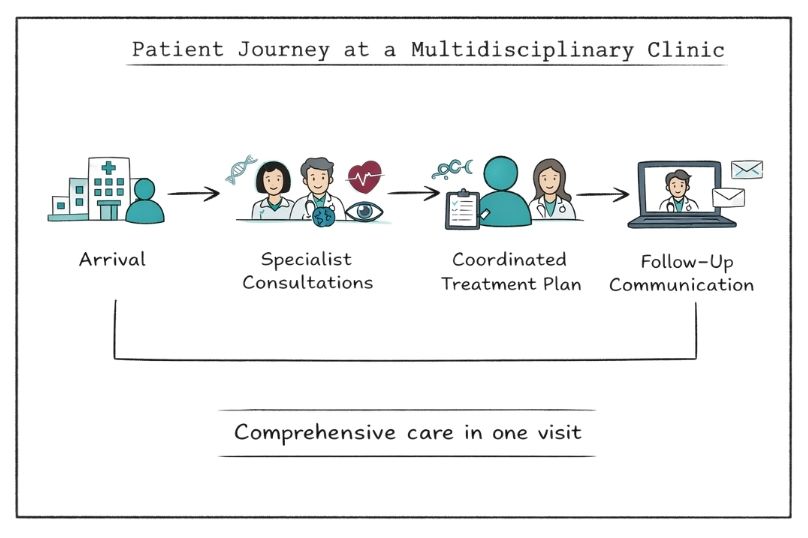
When you visit a multidisciplinary clinic, the experience is very different from traditional medical appointments. Instead of a brief consultation with one doctor, you might spend a full day, or sometimes several days, at the clinic, meeting several specialists who are all coordinated and already familiar with your case.
These visits are designed to be comprehensive, often scheduled annually, and typically include routine diagnostics, specialised consultations, and genetic counselling, all happening in one place. Between these visits, the care team maintains communication with your local doctors to ensure continuity of care and consistent follow‑up.
One of the greatest advantages of multidisciplinary clinics is the speed and efficiency with which information is shared among specialists. Because specialists work in close physical proximity, they can meet face-to-face, review scans and test results together, and make collaborative treatment decisions in real time, rather than waiting weeks for reports to travel between different hospitals or healthcare systems. This smooth communication reduces delays, facilitates the identification of issues more quickly, and ensures that care decisions are made collaboratively.
Improved diagnostic accuracy is one of the most significant advantages of multidisciplinary clinics. When multiple specialists examine the same patient and share their observations, they can identify patterns and connections that might be missed in isolated consultations. This collaborative approach often leads to quicker, more reliable diagnoses and helps shorten the frustrating “diagnostic odyssey” that many rare disease patients experience.
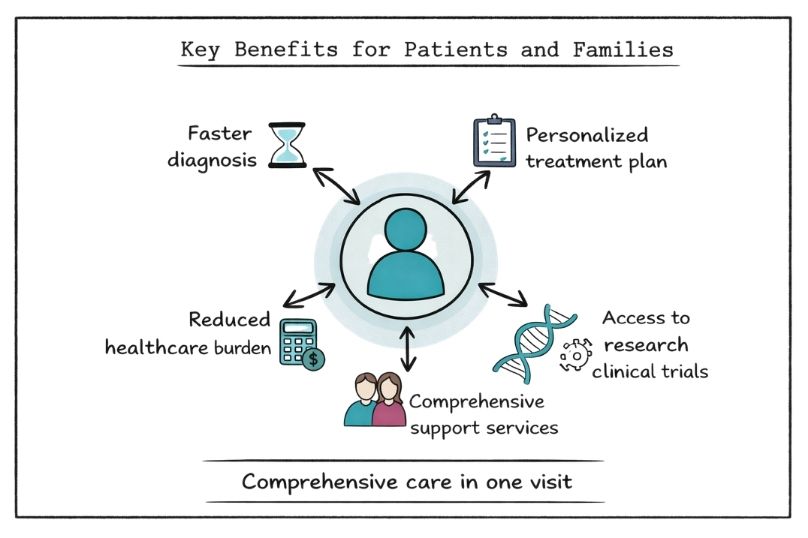
Multidisciplinary teams create holistic treatment plans that address all aspects of a rare disease, not just individual symptoms. They carefully consider how different treatments and therapies might interact, prioritize interventions based on the patient's specific situation, and ensure that care addresses both your immediate needs and long-term management.
For families dealing with rare diseases, coordinating multiple specialist appointments across different locations can be physically exhausting and financially draining. Multidisciplinary clinics reduce this burden by bringing all necessary specialists together in one place, often allowing multiple consultations in a single visit or within a concentrated time period.
These specialized centers often participate in research studies and clinical trials, giving patients access to the cutting-edge treatments that may not be available at standard hospitals or clinics, including those advanced through new FDA breakthrough pathways for rare disease treatments (see this overview on Rare Disease Watch). This concentration of expertise in one place also ensures that clinicians stay current with the latest advancements in their field.
Many multidisciplinary clinics go beyond medical care alone, offering a range of additional support services that address the full impact of a rare disease on patients and families. These often include genetic counseling to help understand inheritance risks, social work support for practical and emotional challenges, patient education programs to empower you with knowledge, and direct connections to patient advocacy groups for community and resources. This comprehensive, whole-person approach helps lighten the broader load that rare diseases place on you and those closest to you.
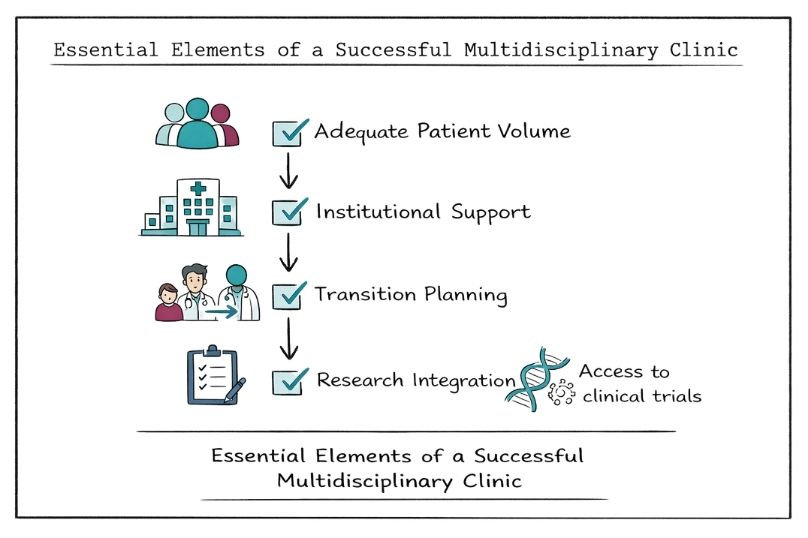
Effective multidisciplinary clinics share several key characteristics that distinguish them from less successful programs:
Adequate Patient Volume: The clinic must see sufficient numbers of patients with the same or similar rare conditions over time to maintain clinical expertise. Specialists need regular exposure to rare diseases to develop pattern recognition and treatment proficiency needed for effective care
Institutional Support: Successful programs don't rely on a single champion. They have solid backing from the hospital or institution, including funding, staffing, and long-term commitment. This ensures the clinic continues to run smoothly even when key team members retire, move on, or take leave.
Transition Planning: Many rare diseases require care from childhood into adulthood. The best clinics have clear, well-planned systems for transitioning patients from pediatric to adult care services without gaps or loss of continuity. This smooth handover protects long-term health management and prevents patients from falling through cracks during a vulnerable time.
Research Integration: The strongest centers don’t separate clinical care from research. They combine patient treatment with studies, clinical trials, and data collection. This keeps the team up to date on the latest developments, gives patients earlier access to emerging treatments, and advances understanding of rare diseases for everyone. To understand how funding drives these efforts, visit RareDiseaseWatch – Research Funding.
Despite their benefits, multidisciplinary clinics for rare diseases face several challenges. Limited funding often restricts the number and scope of these specialized programs. Many healthcare systems struggle to support the intensive coordination these clinics require.
Geographic accessibility remains a significant issue, as these specialized centers are typically located in major medical centers or major cities. As a result, patients and families often have to travel long distances for appointments. While telemedicine is beginning to address some access barriers, hands-on examination, detailed physical assessments, and specialized diagnostic tests still require in-person visits.
Healthcare professionals working in rare disease care have identified several priorities for strengthening multidisciplinary approaches:
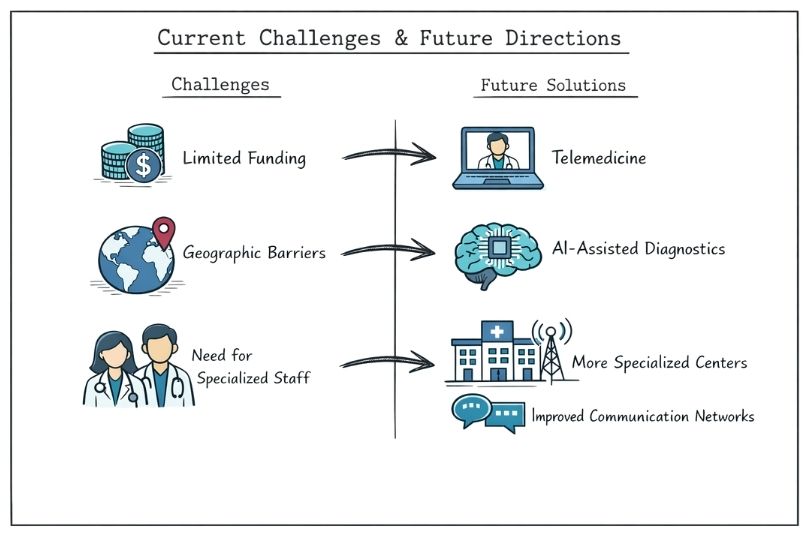
The future of rare disease care is increasingly moving toward more widespread multidisciplinary approaches. As genetic testing becomes more affordable and widely available, and artificial intelligence tools get better at identifying patterns in complex medical data, these specialized clinics will become even more effective. They’ll deliver faster, more accurate diagnoses and truly personalized treatment plans tailored to each patient’s unique condition
For patients and families dealing with rare diseases, understanding what multidisciplinary clinics offer can be empowering; it can help you advocate for better, more coordinated care. If your current treatment feels scattered or disconnected, ask your current specialists about multidisciplinary options. You can also search for specialized centers that focus on your particular rare disease; many now exist and are expanding.
The real goal isn’t just improved medical treatment. It’s about building a healthcare system that truly recognises the complexity of rare diseases and meets that complexity with the same level of thoughtful, coordinated solution. As multidisciplinary approaches continue to grow and evolve, patients with rare diseases can look forward to care that is more integrated, more effective, and more compassionate, truly tailored to meet their unique needs from every angle.
If you are searching for multidisciplinary clinics for rare diseases or specialized medical centers with coordinated care teams, several international directories can help you locate expert clinics around the world. These resources list hospitals and rare disease centers where teams of specialists, including geneticists, neurologists, cardiologists, and other relevant experts, work together to diagnose and manage complex conditions.
You can explore these trusted directories to find rare disease clinics near you or in your region:
• National Organization for Rare Disorders – Centers of Excellence
https://rarediseases.org/center-of-excellence/
• European Reference Networks – Expert Centres Directory
https://www.ern-rnd.eu/expertcentres/
• Rare Diseases Clinical Research Network – Clinical Sites
https://www.rarediseasesnetwork.org/clinical-sites
• Rare Diseases International – Global Member Organizations
https://www.rarediseasesinternational.org/es/members-list/
These directories help patients, caregivers, and families find multidisciplinary rare disease centers worldwide, learn about available specialists, and explore coordinated care options closer to home.