The rare disease community faces a persistent challenge that extends far beyond medical complexity. While public awareness of rare diseases has increased dramatically over the past decade, this heightened visibility has not automatically translated into meaningful understanding. This disconnect creates significant barriers for patients, families, healthcare providers, and researchers working within the rare disease landscape.
The distinction between awareness and understanding represents more than semantic precision; it reflects fundamental differences in how information is processed, retained, and applied in real-world contexts. For the approximately 350 million people worldwide living with rare diseases, this gap can determine the quality of care they receive and the speed at which effective treatments reach them.
Awareness in the rare disease field typically manifests as basic recognition that these conditions exist. Media coverage, awareness campaigns, and advocacy efforts have successfully established that rare diseases affect significant numbers of people globally. Most healthcare professionals now recognize that there are over 7,000 known rare diseases, each affecting fewer than 200,000 people in the United States.
This surface-level awareness extends to understanding basic statistics; 80% of rare diseases have genetic origins, 50% of patients are children, and diagnosis often takes years to achieve. Social media campaigns and awareness days have made these numbers familiar to broader audiences, including policymakers and the general public.
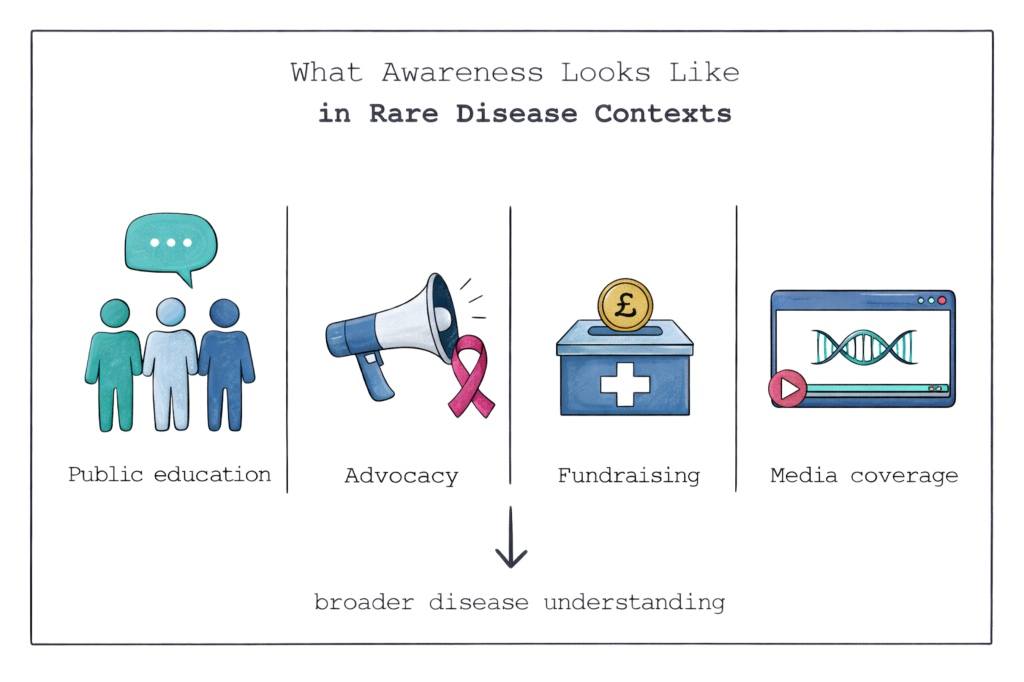
However, this awareness often stops at recognizing the existence of these conditions without progressing to comprehend their complexity, variability, or specific impact on daily life. A person might be aware that cystic fibrosis exists and know it affects breathing, yet lack understanding of how this translates to daily treatment regimens, family planning decisions, or the emotional toll of managing a progressive condition.
Understanding rare diseases demands significantly deeper engagement with the underlying complexities that define these conditions. True understanding encompasses multiple layers of comprehension that awareness alone cannot provide.
Healthcare providers must grasp not only that a condition exists, but also how it presents across different patients, how symptoms can vary dramatically, and why standard diagnostic approaches often fail. Understanding encompasses knowing that 95% of rare diseases lack approved treatments, but also comprehending why this statistic exists and what it means for clinical decision-making.
Understanding rare diseases requires recognizing the interconnected challenges that extend beyond medical symptoms. This includes comprehending insurance barriers, the impact on family dynamics, educational accommodations needed for affected children, and the cascading effects of delayed diagnosis on multiple life domains.
For researchers and policymakers, understanding means grasping why traditional research models often fail for rare diseases, why patient populations are difficult to study, and how regulatory frameworks must adapt to address conditions affecting small numbers of patients.
Several structural factors contribute to the persistent gap between rare disease awareness and understanding, creating barriers that simple information dissemination cannot address.
Rare diseases present layered complexities that resist straightforward explanation. Each condition involves intricate biological mechanisms, variable presentations, and unique care requirements. This complexity can overwhelm both healthcare providers and the general public, leading to superficial engagement rather than deeper comprehension.
Unlike common conditions that most people encounter through personal or family experience, rare diseases remain abstract for most individuals. Without direct exposure, understanding remains theoretical rather than experiential, limiting the depth of comprehension that develops naturally through lived experience.
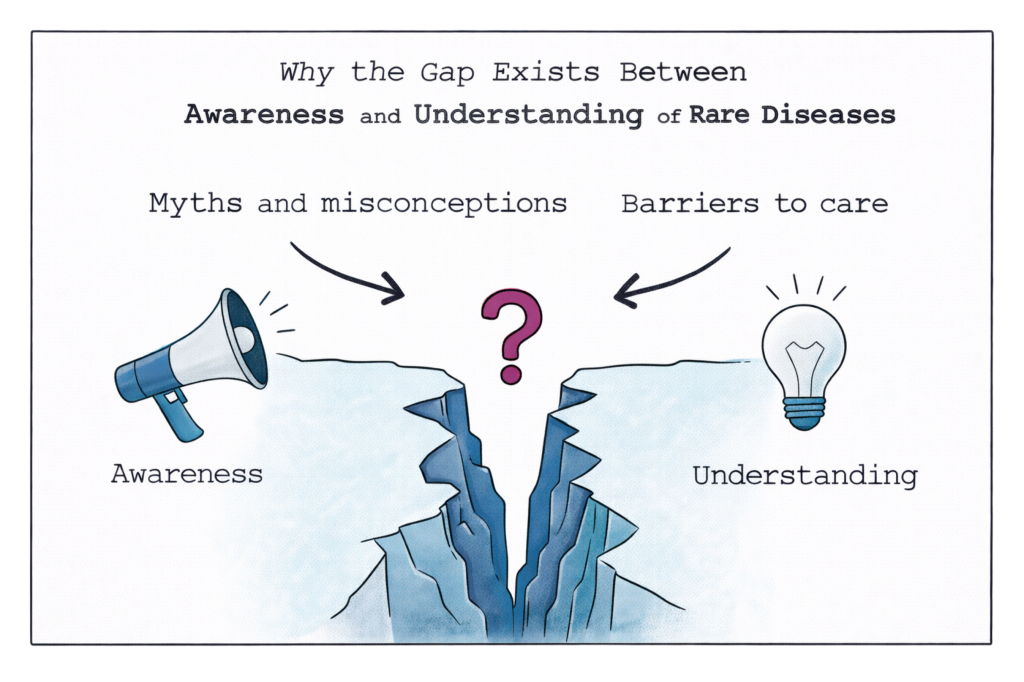
Rare disease information often exists in disconnected fragments across medical literature, patient advocacy resources, and clinical guidelines. This fragmentation makes it difficult to develop comprehensive understanding, as people encounter pieces of information without clear frameworks for integration.
Healthcare systems operate under significant time and resource pressures that limit opportunities for developing deep understanding of rare conditions. Providers may achieve awareness through continuing education but lack the time and resources necessary to develop true expertise in conditions they encounter infrequently.
The practical consequences of this gap manifest throughout the rare disease ecosystem, creating tangible barriers to optimal care and outcomes.
Healthcare providers who are aware that rare diseases exist but lack understanding of their presentations may overlook subtle symptoms or dismiss early signs as more common conditions. This contributes to the average 7.6 years it takes to receive an accurate rare disease diagnosis.
School systems, employers, and social services may be aware that rare diseases create special needs but lack understanding of specific accommodations required. This superficial awareness can lead to inadequate support structures that fail to address actual needs.
Policymakers and funding organizations may be aware of rare disease research needs but lack understanding of why traditional research models require adaptation. This can result in funding structures that inadvertently create barriers for rare disease research initiatives.
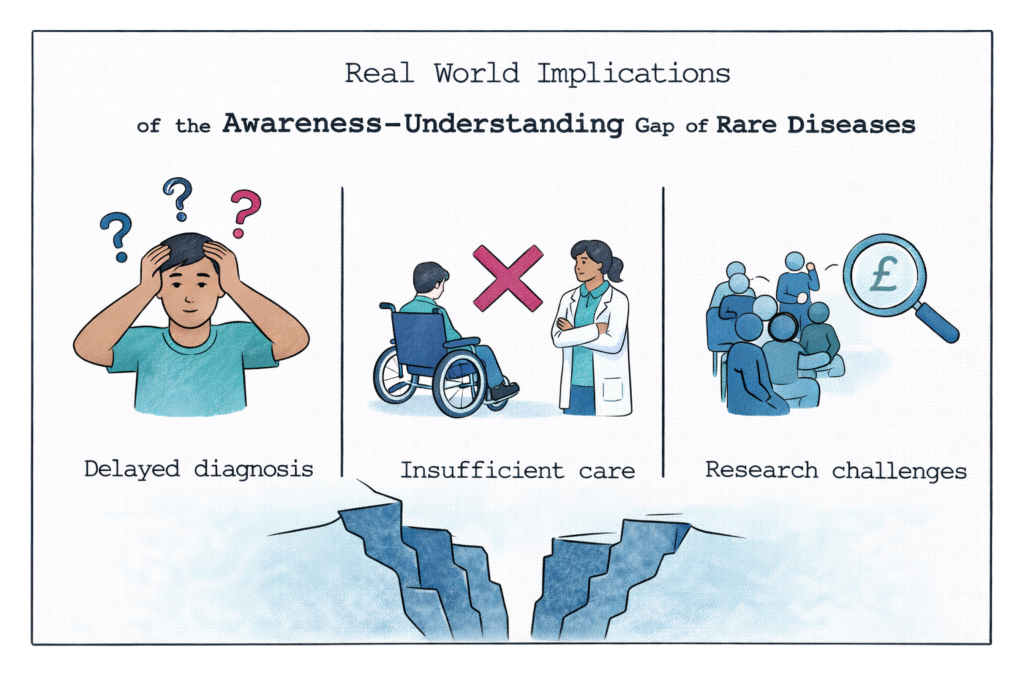
Family members, friends, and colleagues may be aware that someone has a rare disease but lack understanding of how this affects daily life, leading to well-intentioned but inappropriate responses or expectations.
Effective rare disease education must move beyond awareness-building to developing genuine understanding across multiple stakeholder groups.
Medical education programs increasingly include rare disease content, but emphasis must shift from memorizing condition lists to developing diagnostic reasoning skills and understanding of rare disease principles. This includes recognizing patterns that suggest rare disease involvement and knowing when and how to access specialized expertise.
Newly diagnosed patients and families require education that builds understanding of their specific condition while also providing context about rare diseases generally. This education must address not only medical aspects but also practical navigation of healthcare systems, insurance, and support services.
Broader public understanding requires education that goes beyond statistics and awareness campaigns. Effective approaches include storytelling that illustrates lived experiences, explanation of research processes, and clear communication about why rare diseases matter for society broadly.
Several strategies can help bridge the awareness-understanding gap more effectively than traditional approaches.
Developing comprehensive, accessible information resources that present rare disease information in integrated formats rather than fragmented pieces is of great importance. These systems should connect basic facts with practical implications and provide clear pathways for deeper learning.
Creating opportunities for healthcare providers, policymakers, and other stakeholders to engage with rare disease patients and families directly is something to put into serious consideration. This experiential learning builds understanding that pure information transfer cannot achieve.
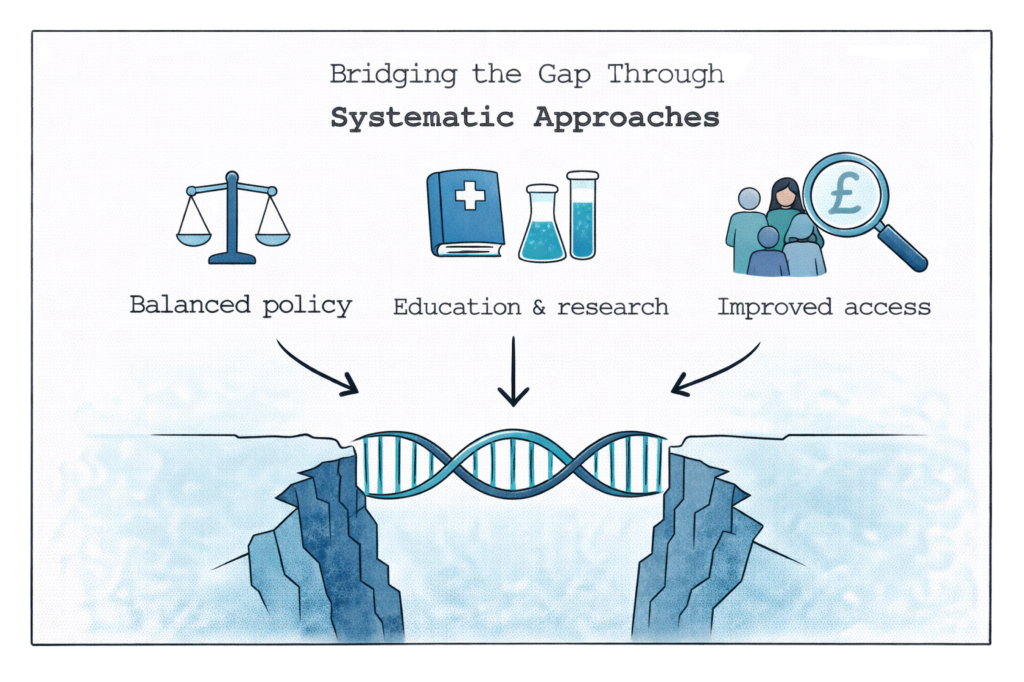
Establishing educational partnerships between medical institutions, patient organizations, and research centers to create comprehensive learning experiences that address multiple perspectives and knowledge domains simultaneously will go a long way to bridging this unnecessary gap.
Utilizing simulation technologies, virtual reality, and interactive platforms to help learners experience rare disease challenges more directly, building empathy and understanding alongside factual knowledge will all play a vital role in significantly understanding rare diseases.
The transition from awareness to understanding requires sustained commitment from all stakeholders in the rare disease community. This includes healthcare systems investing in comprehensive education, research institutions developing better knowledge translation strategies, and policy makers engaging more deeply with rare disease complexities.
Success in bridging this gap will require measuring understanding, not just awareness. This means tracking whether education initiatives lead to improved diagnostic accuracy, better patient outcomes, more effective policies, and increased support for rare disease research and care.
Understanding rare diseases ultimately serves everyone's interests. The innovations developed for rare disease diagnosis and treatment often benefit broader populations, the research methodologies developed create templates for addressing other challenging conditions, and the healthcare system improvements required benefit all patients navigating complex medical needs.
The rare disease community has made remarkable progress in raising awareness. The next critical step involves converting that awareness into the deeper understanding necessary to create meaningful change for the millions of people whose lives depend on it.