Patients with rare diseases often wait five to seven years for an accurate diagnosis, a delay that can shape outcomes long before treatment begins. In this landscape, genetic testing and counselling are emerging as critical tools to shorten the diagnostic journey and support informed healthcare decisions.
Genetic testing examines DNA, chromosomes, or proteins to identify variants linked to inherited conditions. Advances in genomic technologies have transformed diagnostic pathways, particularly in rare diseases where symptoms are often unclear or overlapping.
Genetic counselling brings together expertise in medical genetics and patient communication. Specialists analyse family medical history, explain inheritance patterns, and guide families through the benefits, limitations, and implications of testing. They also play a critical role in helping families navigate the emotional and ethical challenges associated with genetic information.
Together, genetic testing and counselling form the foundation of precision medicine in rare diseases. As genomic medicine continues to evolve, integrating these services into routine care pathways will be essential to improving outcomes and reducing the diagnostic burden for patients and families.
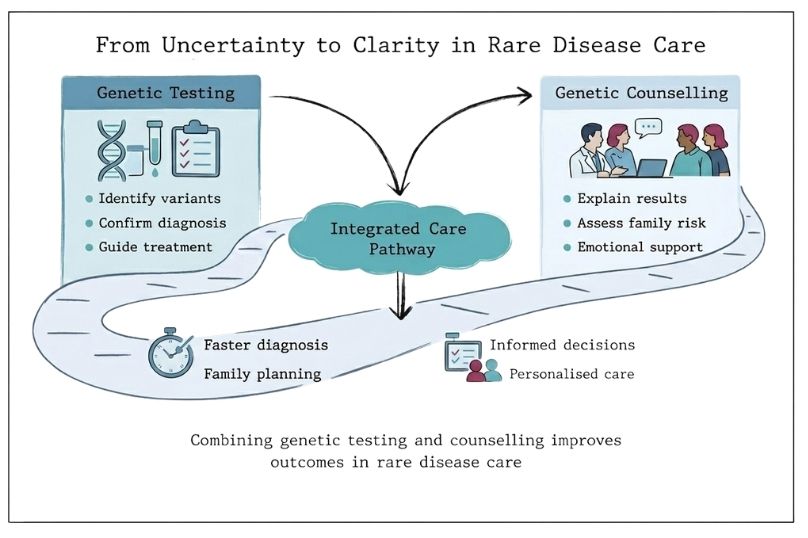
Genetic testing is an important part of rare disease care, helping to identify the underlying genetic causes of complex conditions. It involves analysing DNA through a structured process of clinical assessment, sample collection and laboratory analysis. Typically, a blood or saliva sample is collected, and the results are interpreted in the context of an individual’s clinical and family history.
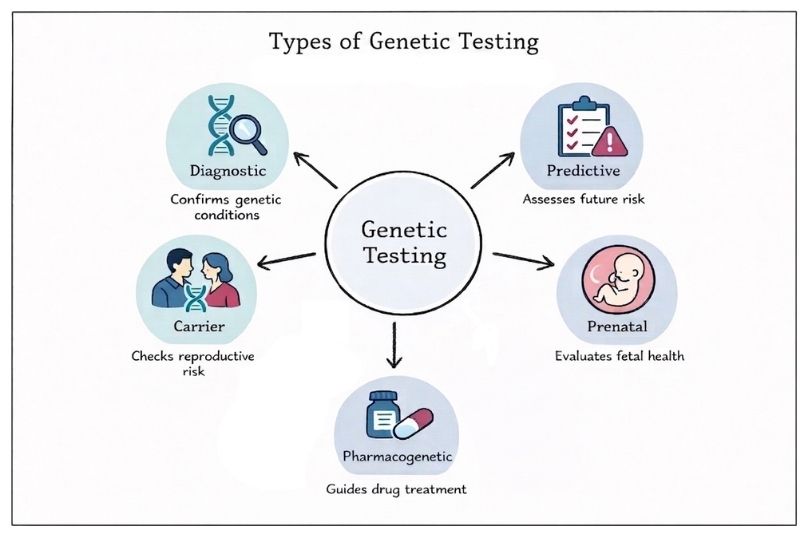
Genetic testing encompasses several different approaches, each tailored to specific clinical situations and information needs.
Diagnostic testing confirms or rules out suspected genetic conditions in individuals presenting with symptoms. These tests examine specific genes known to cause particular disorders and provide definitive answers on underlying causes and supports targeted clinical management.
Predictive testing identifies genetic variants that increase the likelihood of developing certain conditions before symptoms appear. This enables early monitoring and, where possible, preventive interventions.
Carrier testing determines whether individuals carry genetic variants that could be passed on to their children. Carriers typically show no symptoms but may have children affected by recessive genetic conditions if both parents carry variants in the same gene. This information is critical for reproductive planning, particularly for recessive conditions.
Pharmacogenetic testing examines how genetic differences influence responses to medications, supporting more personalised and effective treatment strategies. It is an important consideration in rare diseases where therapeutic options may be limited due to significant side effects.
Prenatal testing evaluates the genetic health of a fetus during pregnancy. Techniques such as chorionic villus sampling and amniocentesis provide diagnostic information, while non-invasive prenatal screening analyses fetal DNA in maternal blood to assess risk.
Genetic test results require careful interpretation, as outcomes are often more complex than simply “positive” or “negative.”
Positive results indicate identification of genetic changes known to cause or increase disease risk. These findings confirm genetic diagnoses and provide information about inheritance patterns and recurrence risks.
Negative results mean no disease-causing genetic changes were identified in the genes tested. However, this does not completely rule out a genetic condition, as current tests may not detect all possible genetic variations, and scientific knowledge continues to evolve.
Variants of uncertain significance (VUS) refer to a genetic change whose impact on health is not yet clearly understood. These results may be reclassified over time as more research becomes available.
Incidental findings are unexpected results that are unrelated to the original reason for testing but may have important health implications. Guidelines typically recommend reporting only those findings where preventive measures or treatments are available.
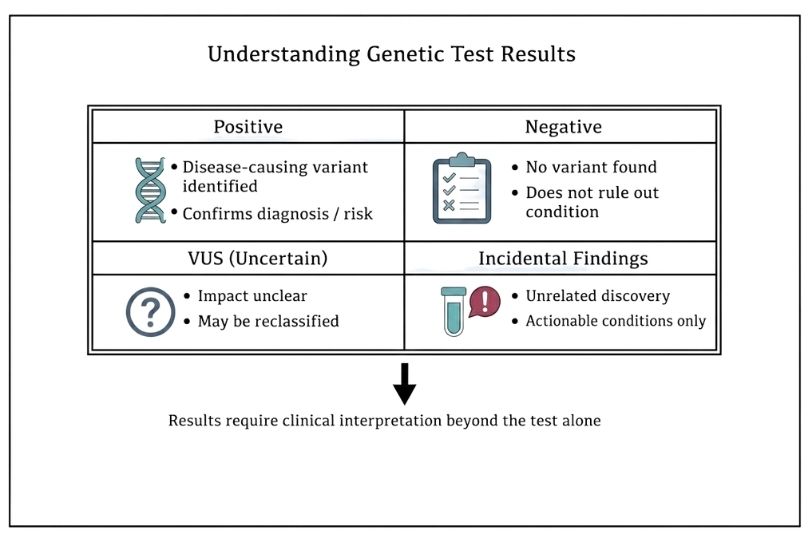
Interpreting genetic results involves more than the test itself. Clinicians consider an individual’s medical history, family background, testing methods, and the latest scientific evidence to provide accurate and meaningful guidance.
Genetic counselling is a key component of rare disease care, helping individuals and families understand, interpret, and adapt to genetic information. It begins with a detailed assessment of family medical history, often extending across multiple generations to identify patterns of inherited conditions. Counsellors construct pedigrees to map genetic relationships and assess potential hereditary risks. Through risk assessment, they estimate the probability of disease occurrence or recurrence within families based on genetic and clinical information.
During consultations, they explain inheritance patterns, discuss testing options, and outline possible outcomes, providing clear and evidence-based information while supporting families in making their own decisions. Discussions also cover test accuracy, limitations, psychological implications, and potential impacts on other at-risk family members. Importantly, genetic counselling is non-directive, allowing patients to make decisions aligned with their values and circumstances.
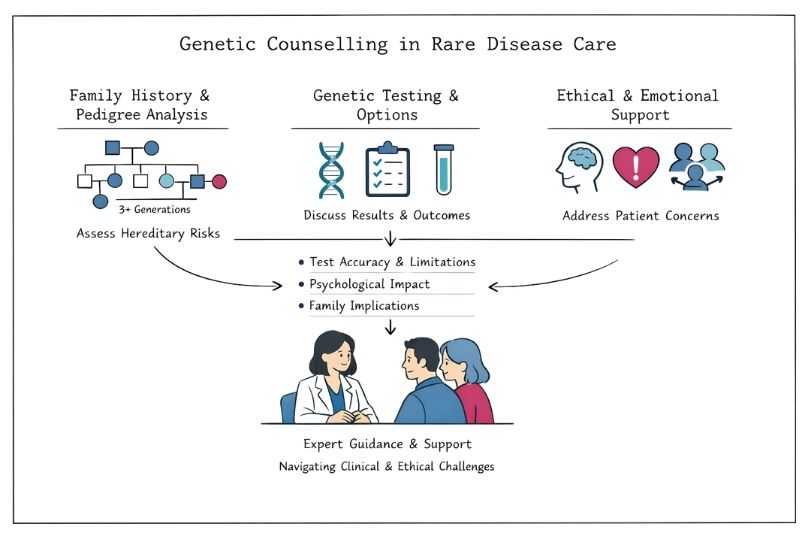
Genetic counsellors are highly trained professionals with expertise in both medical genetics and patient communication. Their role extends beyond interpretation to helping families navigate the clinical, emotional, and ethical complexities of genetic information.
Several clinical situations may prompt a referral for genetic counselling, particularly when a rare disease is suspected or confirmed.
Family history indicators include multiple relatives with the same or related conditions, early disease onset, or conditions affecting multiple organ systems. Consanguinity between parents also increases the likelihood of inherited genetic conditions.
Individual medical indicators involve unexplained developmental delays, intellectual disabilities, multiple birth defects, or unusual physical features. Progressive neurological symptoms without a clear cause often warrant further genetic evaluations.
Reproductive planning considerations include previous pregnancies affected by genetic conditions, recurrent pregnancy losses, or infertility with no clear explanation. Couples from populations with increased risks of certain genetic conditions may also benefit from counselling.
Unexpected screening results during routine medical care can sometimes indicate underlying genetic conditions, requiring specialised interpretation and follow-up.
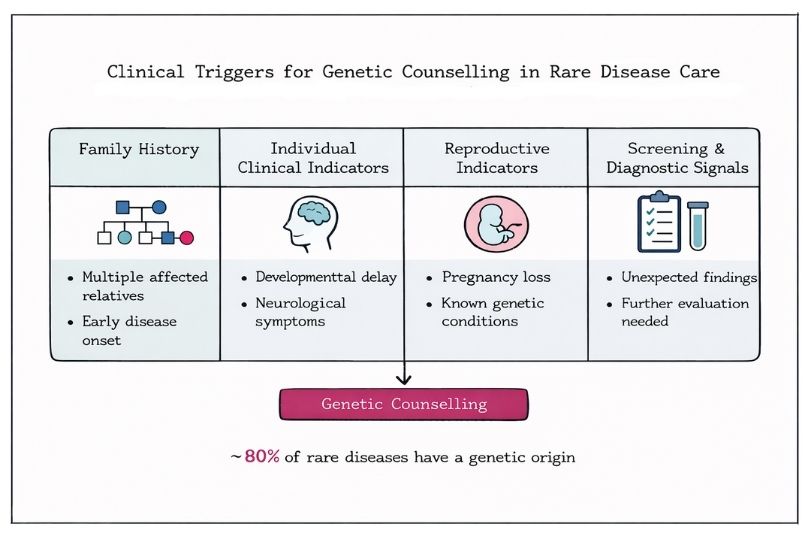
Research indicates that approximately 80% of rare diseases have a genetic origin, making genetic services particularly relevant for families navigating rare disease diagnoses.
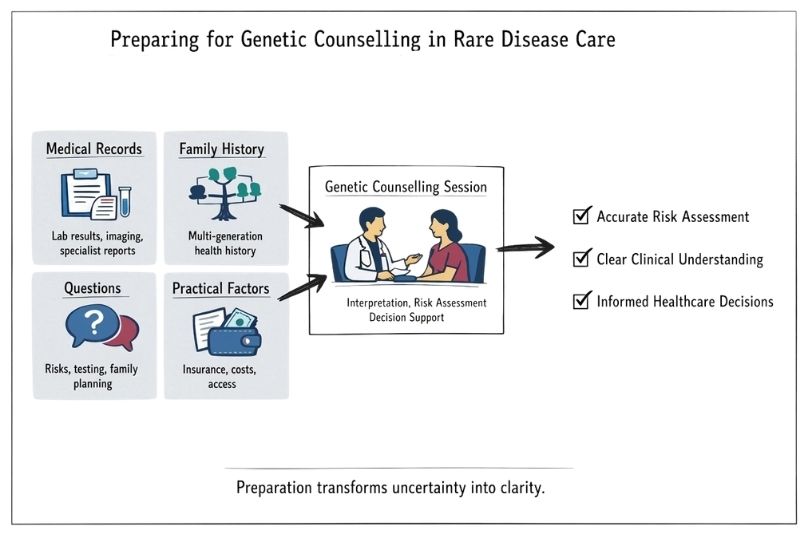
Effective preparation enables precise risk assessment and informed clinical discussions. Well organised information allows consultations to focus on interpretation and decision making rather than data collection.
Compile relevant medical records, including hospital records, laboratory results, imaging studies, and specialist reports for affected family members. Where available, autopsy reports for deceased relatives can provide valuable diagnostic insights.
Gather detailed health information across multiple generations. Key details such as ethnic background, age at disease onset, and causes of death help construct accurate pedigrees and identify inherited risk patterns.
Preparing questions in advance helps address specific concerns and ensures a more productive consultation. Common topics include inheritance risks, testing implications, interpretation of results, family communication, and family planning considerations.
Review insurance coverage for genetic services and understand potential out-of-pocket costs, as coverage can vary significantly across healthcare systems.
Genetic counsellors play a multifaceted role in rare disease care, extending beyond test interpretation to provide holistic support across the diagnostic and decision-making process.
Genetic counsellors translate complex genetic concepts into accessible information, explaining inheritance patterns and clarifying misconceptions. This supports clearer understanding of how genetic conditions affect health, daily life, and long-term planning.
They address emotional responses to genetic information, including anxiety, uncertainty, and guilt. Counsellors help families process the implications of diagnosis for individual identity and family dynamics.
Genetic counsellors guide families in sharing genetic information with relatives who may be at risk. They support sensitive discussions and help connect family members with appropriate resources and testing pathways.
Collaboration with multidisciplinary healthcare teams ensures comprehensive management of genetic conditions. Counsellors facilitate referrals, support continuity of care, and align genetic insights with broader clinical pathways.
Evidence shows that genetic counselling reduces anxiety and improves satisfaction with care, highlighting its importance as a patient-centred component of rare disease management.
Access to genetic services varies significantly across healthcare systems, shaping how patients receive diagnosis and care.
Service availability is concentrated in specialised centres and urban settings, creating access challenges for patients in rural or underserved regions. Expanding telemedicine is helping to improve reach, but disparities in availability remain.
Choice of laboratory influences test accuracy, turnaround times, and costs. Genetic counsellors support patients in navigating these decisions, ensuring appropriate testing aligned with clinical needs.
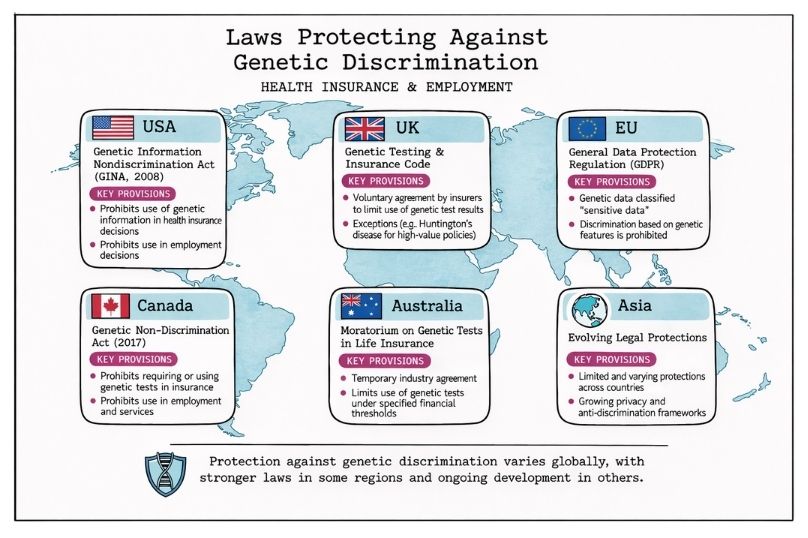
Cost and Insurance coverage for genetic services differs widely across healthcare systems and insurance models. Out-of-pocket costs for testing, consultations, and follow-up care can create barriers to access, particularly where services are not fully integrated into standard care pathways. Many genetic tests cost between $300 and $3,000, though specialised testing may exceed these ranges. Legal protections against genetic discrimination vary significantly across regions, shaping how genetic services are accessed and utilised.
Professional organisations and healthcare networks often provide directories and referral pathways to help patients access qualified genetic services. However, awareness and referral efficiency can vary across systems.
Genetic counselling often extends beyond initial consultations, providing ongoing support as families adapt to genetic information.
Regular follow-up appointments address questions that arise after initial sessions and incorporate emerging scientific evidence. As genetic research advances, interpretations of conditions and management strategies may evolve, requiring periodic reassessment.
Family support includes connecting families with condition-specific support groups, advocacy organisations, and educational resources. These networks provide both practical guidance and shared experiences, helping families navigate long-term care.
Research participation may be available through genetic counsellors who maintain relationships with researchers studying specific genetic conditions. Participation can contribute to advancing knowledge while providing access to cutting-edge diagnostic and treatment options.
For many families, the journey to diagnosis is marked by uncertainty and unanswered questions. Genetic testing and counselling offer more than answers. They provide understanding, guidance and reassurance. As these services become more integrated into care, they hold the potential to not only shorten the diagnostic journey but also support families in navigating the future with greater confidence.