Digital technology is fundamentally transforming rare disease management by addressing longstanding challenges that have historically complicated diagnosis, treatment, and ongoing care. For the estimated 400 million people worldwide affected by rare diseases, technological innovations offer unprecedented opportunities to improve outcomes, reduce delays, and enhance the quality of life.
The incorporation of artificial intelligence, mobile applications, and digital health platforms represents a significant advancement in rare disease care. These tools are reshaping how patients navigate their healthcare journey, from initial symptom recognition to long-term disease management.
The diagnostic odyssey remains one of the most challenging aspects of rare disease management. Patients typically experience a five to seven-year delay before receiving an accurate diagnosis, during which they may consult multiple specialists and undergo numerous tests. This extended timeline often results in disease progression, increased healthcare costs, and significant emotional burden for patients and their families.
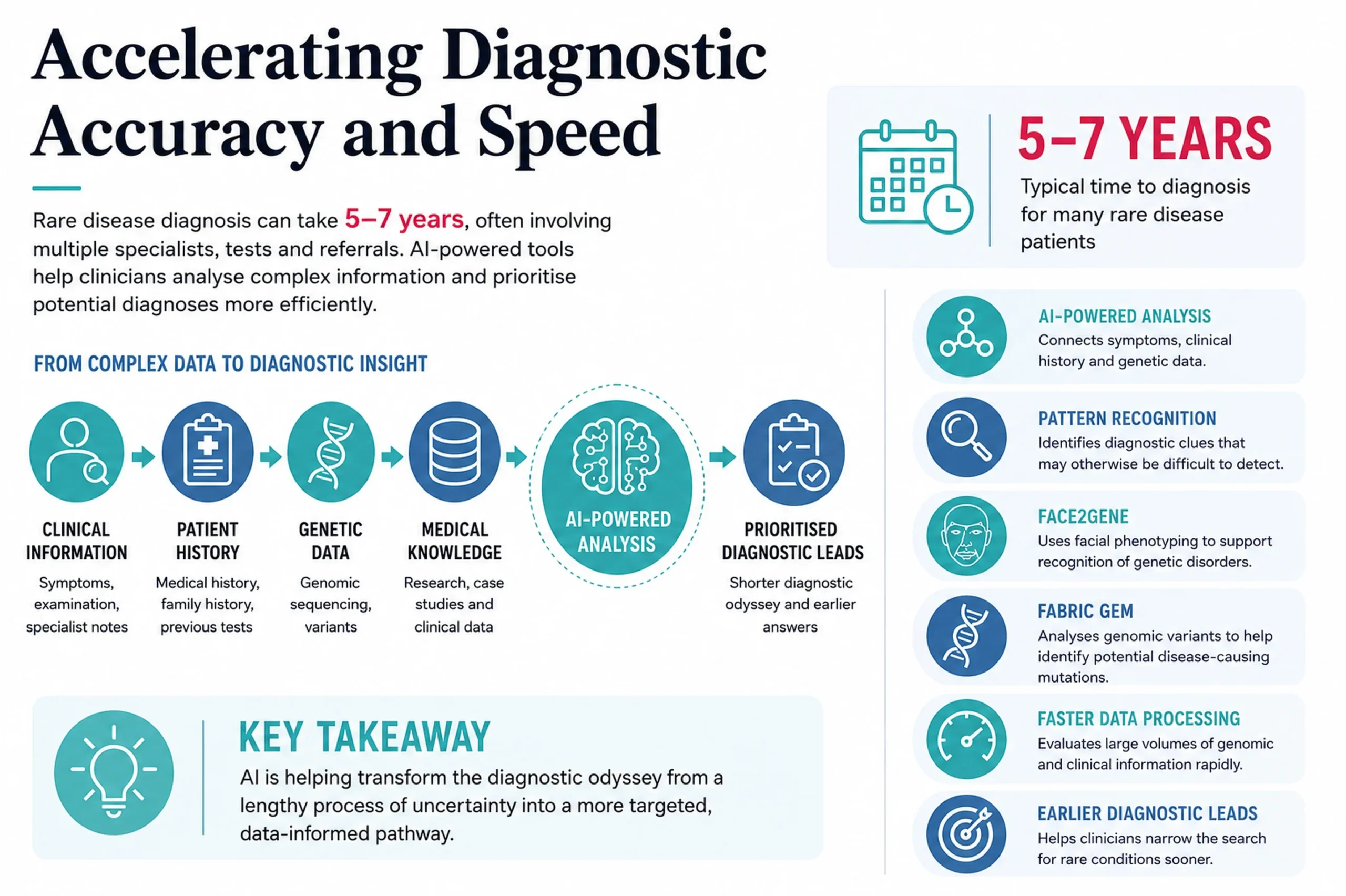
AI-powered diagnostic tools are dramatically reducing these delays. Machine learning algorithms analyse complex datasets, including genetic information, clinical symptoms, and patient histories, to identify patterns that may indicate specific rare conditions. These systems can process vast amounts of medical literature and case studies to suggest potential diagnoses that clinicians might not immediately consider.
Face2Gene represents a breakthrough in phenotypic analysis, which uses computer vision technology to analyse facial features and identify genetic disorders with distinctive facial characteristics. This tool has proven particularly valuable for diagnosing conditions where facial dysmorphology is a key diagnostic criterion. The platform continuously learns from new cases, improving its accuracy and expanding its diagnostic capabilities.
Fabric GEM focuses on genetic variant analysis. It rapidly processes genomic data to identify potential disease-causing mutations. This platform can analyse thousands of genetic variants in minutes, comparing them against extensive databases of known pathogenic mutations and clinical phenotypes.
Digital platforms are revolutionising treatment management by providing personalised support systems that adapt to individual patient needs. These tools address the complex medication regimens and treatment protocols often required for rare disease management.
Mobile applications designed for rare disease patients offer comprehensive symptom tracking capabilities, enabling patients to record daily experiences, medication responses, and disease progression indicators. This data supplies healthcare providers with detailed insights into treatment effectiveness and potential adjustments needed for better outcomes.
Automated treatment reminder systems have shown significant success in improving adherence to medication. These platforms send personalised notifications via email, SMS, or mobile app alerts, reminding patients about medication schedules, appointment dates, and clinical monitoring. Some systems incorporate sophisticated algorithms that adjust reminder timing based on individual patient response patterns and preferences.
Some newer platforms are beginning to bring multiple functions together into unified ecosystems. For example, Rare Disease Apps combines tools for tracking, education, and community support within a single environment. Features such as Shared Patient Journeys allow families to compare medical timelines. Educational tools such as DNA G-Cat - a gamified digital learning tool developed to enhance comprehension of core rare disease genetic principles through an interactive, user-friendly experience and visual resources like Gene Exon Editor further support understanding of complex, rare genetic diseases and conditions.

Digital treatment support extends beyond medication management to include comprehensive care coordination. Platforms now offer integrated services including travel assistance programs, home infusion coordination, and nurse check-in services. These holistic support systems recognise that rare disease management often requires complex logistical coordination that extends far beyond traditional medical care.
Rare disease management frequently involves extensive caregiver involvement, particularly when patients are children or when conditions affect cognitive function. Digital tools designed specifically for caregivers address the unique challenges of managing complex medical needs while maintaining quality of life for the entire family.
MiraKare exemplifies comprehensive caregiver support platforms, providing tools specifically designed for families managing rare diseases that affect cognitive abilities. The platform offers educational resources, symptom tracking capabilities, and community support features that help caregivers feel more confident and informed in their role.

Evidence suggests that effective digital tools should "lessen the burden of managing a rare disease condition" while "fostering community building and promoting trust" among users. This dual focus on practical support and emotional connection addresses both the logistical and psychological challenges inherent in rare disease caregiving.
AI is accelerating drug discovery and repurposing efforts, potentially identifying existing medications that could benefit rare disease patients. This approach offers particular promise, given the limited commercial incentives for developing new treatments specifically for small patient populations.
Machine learning algorithms can analyse thousands of approved medications to identify potential therapeutic applications for rare diseases. A notable success story involves the identification of adalimumab as a potential treatment for idiopathic multicentric Castleman's disease through AI analysis of 4,000 existing medications. This discovery ultimately helped save a patient's life and demonstrates the life-changing potential of AI-driven drug repurposing.
Healx represents an advanced AI drug discovery platform that predicts which existing drugs or drug combinations have the highest probability of success for specific rare diseases. By analysing molecular pathways, genetic factors, and clinical data, these platforms can identify therapeutic opportunities that might otherwise remain undiscovered.
Modern rare disease management increasingly relies on integrated digital health platforms that combine multiple functionalities within a single, user-friendly interface. These comprehensive systems address the fragmented nature of rare disease care by providing centralised access to various support tools and services.
Integrated platforms typically include electronic health record integration, enabling data sharing between patients and healthcare providers. This connectivity ensures that symptom tracking data, medication adherence information, and treatment response data are immediately available to clinical teams for informed decision-making.

FindEHR exemplifies sophisticated electronic health record integration, helping patients and providers access comprehensive medical histories and treatment responses across multiple healthcare systems. This capability is particularly valuable for rare disease patients who often require care from specialists at different institutions.
Digital health tools for rare diseases provide measurable benefits for all stakeholders involved in patient care. For patients, these technologies minimise the time, financial resources, and effort required to obtain accurate diagnoses and access appropriate treatments. Early diagnosis typically correlates with improved treatment outcomes and reduced long-term complications.
Healthcare providers benefit from enhanced clinical decision support that reduces diagnostic errors and provides evidence-based treatment recommendations. AI-powered tools enable physicians to manage complex cases more effectively, even when they have limited experience with specific rare conditions.
Patients experience cost benefits through reduced unnecessary testing, fewer misdiagnoses, and earlier treatment initiation that prevents downstream complications. The economic impact of delayed diagnosis extends far beyond immediate healthcare costs, affecting productivity, family finances, and healthcare system resources.
Successful implementation of digital health tools requires careful consideration of patient privacy, data security, and regulatory compliance. Rare disease patients often share highly sensitive genetic and medical information through these platforms, necessitating robust security measures and transparent data governance policies.
Interoperability remains a critical challenge as healthcare systems work to integrate multiple digital tools while maintaining data consistency and accessibility. Standardised data formats and communication protocols are essential for creating seamless patient experiences across different platforms and healthcare providers.
The future of digital health in rare disease management points toward increasingly personalised and predictive capabilities. Machine learning algorithms will continue improving their diagnostic accuracy and treatment recommendations as they process larger datasets and incorporate more sophisticated analytical techniques.
Digital technology has emerged as a powerful ally in addressing the complex challenges of rare disease management. From accelerating diagnosis through AI-powered analysis to supporting treatment adherence through personalised mobile applications, improving knowledge of rare genetic conditions and interactive family-centred tools, these advances are improving outcomes for patients and families worldwide. As technological capabilities continue evolving, the integration of digital health platforms will likely become an essential component of comprehensive rare disease care, offering hope for better outcomes and enhanced quality of life for affected individuals and their caregivers.