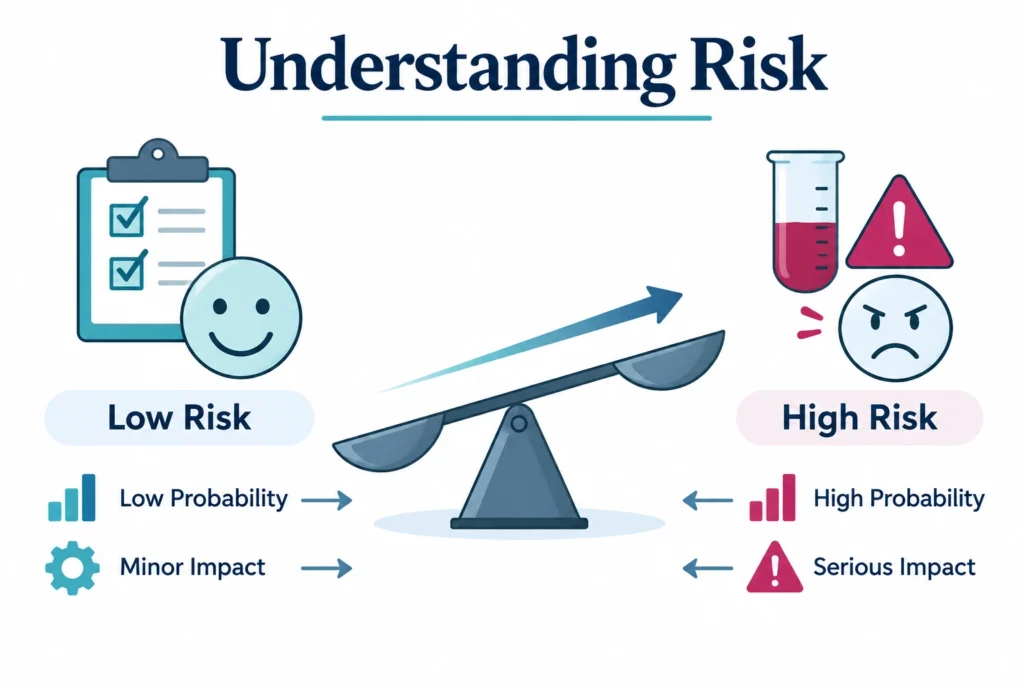
Risk is a widely used but often misunderstood term. In healthcare, science, and public discourse, it does not simply mean danger or something negative. Instead, risk has a precise meaning: it refers to the probability that a particular event will occur, combined with the potential impact of that event. Understanding this distinction is essential for interpreting medical information, making informed decisions, and evaluating treatments or interventions.
At its most basic level, risk is about likelihood. It answers the question: how likely is something to happen? However, this is only part of the definition. Risk also considers the consequences if that event does occur. A highly likely event with minimal impact may be considered low risk, while a rare event with serious consequences may still be considered high risk.
This dual nature, probability and impact, is central to how risk is assessed in healthcare. It explains why risk is not simply about whether something can happen, but how often it happens and how serious the outcome would be.
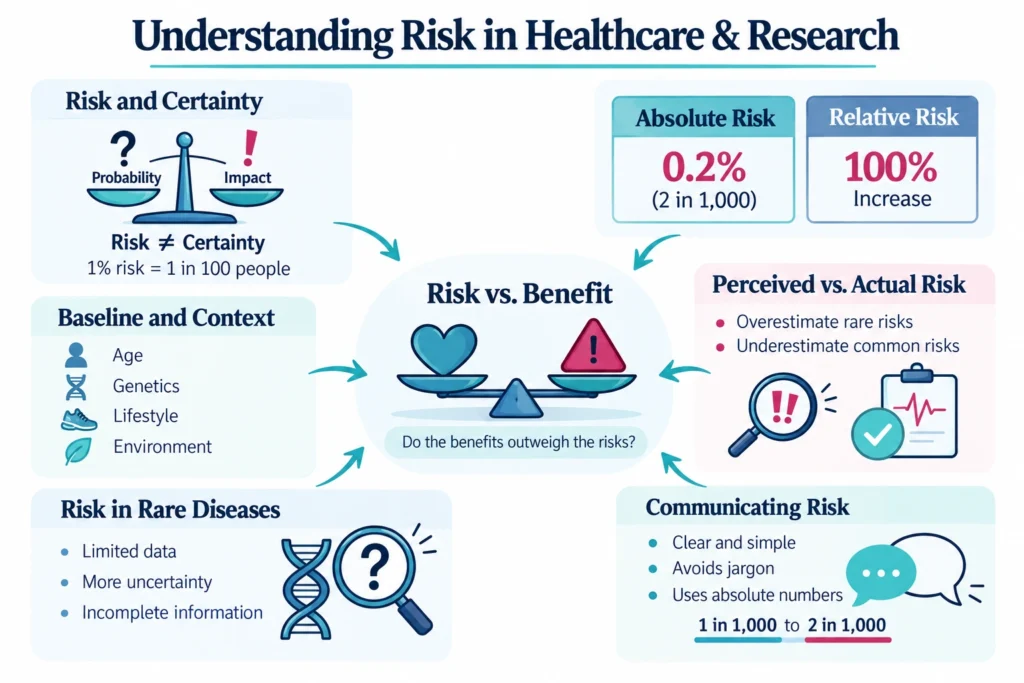
One of the most common misunderstandings is treating risk as certainty. Saying there is a “risk” of a side effect does not mean it will happen. It means there is a measurable chance, often small, that it could occur.
For example, if a medication carries a 1 per cent risk of a side effect, this means that, on average, 1 in 100 people may experience it. It does not predict what will happen to any individual patient. Risk operates at the population level, not at the level of certainty for an individual.
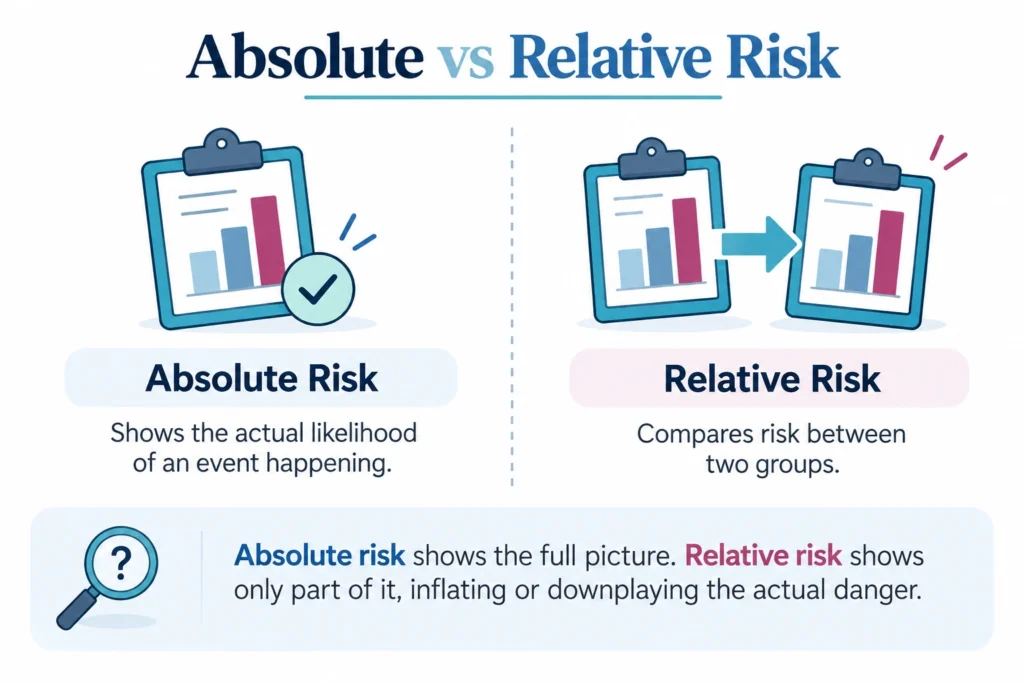
Two important concepts in understanding risk are absolute risk and relative risk. These are often used in research and media reporting, but can lead to confusion if not clearly distinguished.
Absolute risk refers to the actual likelihood of an event occurring. For example, if 2 out of 1,000 people experience a side effect, the absolute risk is 0.2 per cent.
Relative risk compares the risk between two groups. If one group has twice the risk of another, this is a 100 per cent increase in relative risk. However, if the original risk is very small, the absolute difference may still be minimal. Understanding both measures is essential for interpreting claims about increased or reduced risk.
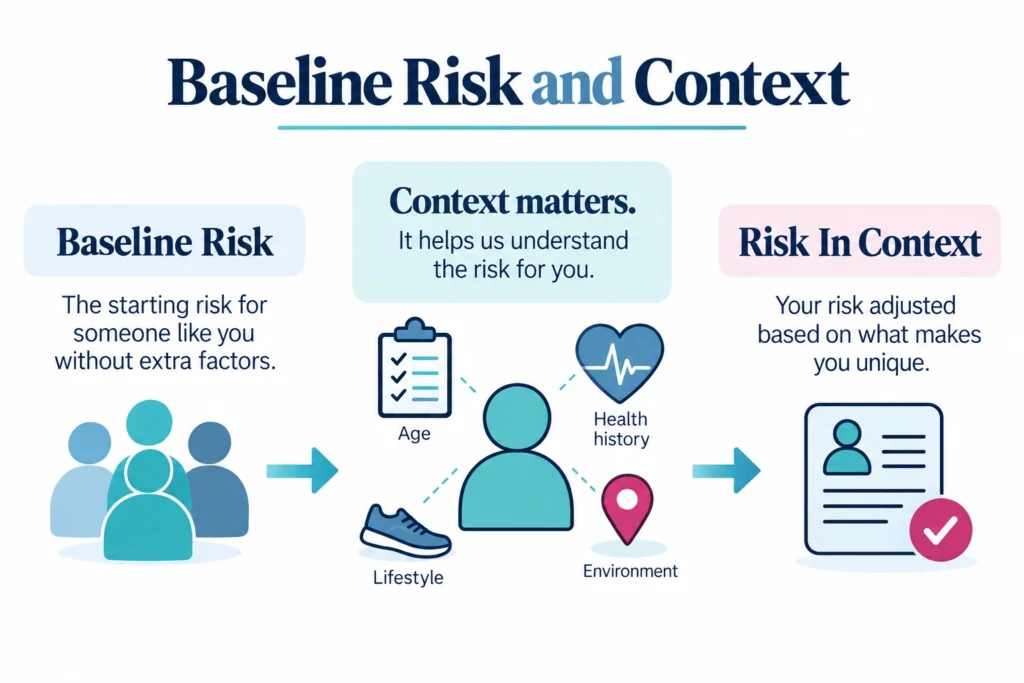
Risk cannot be understood in isolation. It must always be considered in context, particularly in relation to baseline risk. Baseline risk is the likelihood of an event occurring without any intervention.
For example, if a condition naturally carries a certain level of risk, a treatment may increase or decrease that risk. Without knowing the baseline, it is difficult to interpret whether a change is clinically significant.
Context also includes patient-specific factors such as age, genetics, lifestyle, and co-existing conditions. These factors can modify risk and explain why the same treatment may have different implications for different individuals.
In healthcare, decisions are rarely based on risk alone. They are based on a balance between risk and benefit. Every treatment, intervention, or procedure carries some level of risk. The key question is whether the expected benefit outweighs the risk.
For example, a treatment with potential side effects may still be appropriate if it significantly improves survival or quality of life. Conversely, a treatment with minimal benefit may not be justified if it carries even a small risk.
This balance is not fixed. It depends on the severity of the condition, the availability of alternatives, and patient preferences.
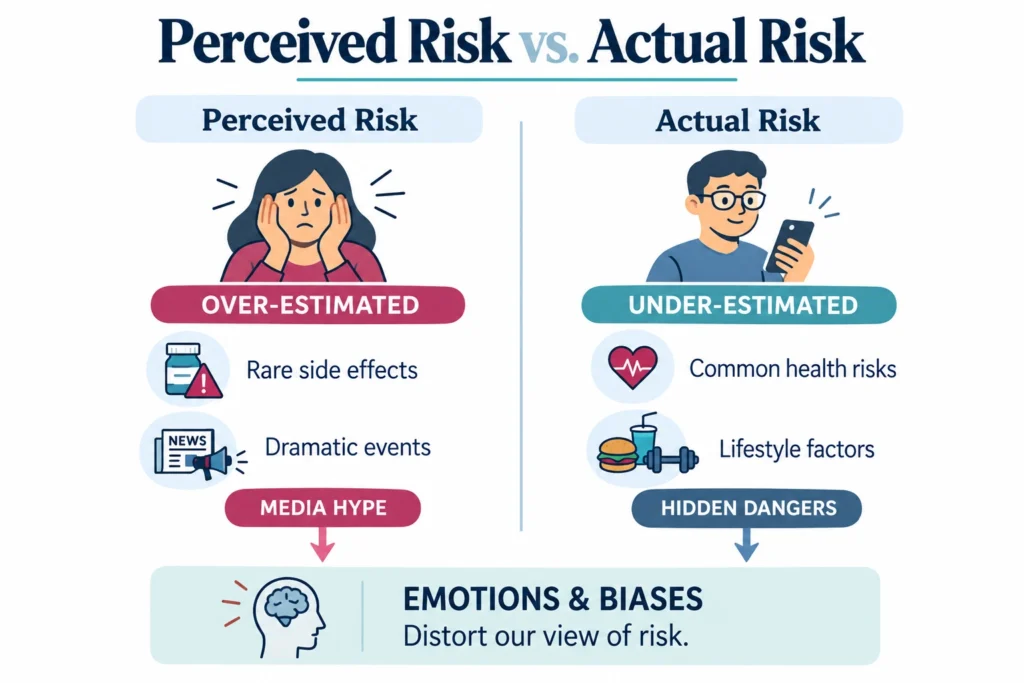
There is often a gap between how risk is perceived and how it is measured. People tend to overestimate risks that are unfamiliar, dramatic, or widely reported, and underestimate risks that are common or less visible.
For example, rare side effects of medications may receive significant attention, leading to heightened concern, even when the actual probability is very low. At the same time, more common risks, such as those associated with lifestyle factors, may be overlooked.
Understanding this distinction is important for making balanced decisions and avoiding unnecessary anxiety or false reassurance.
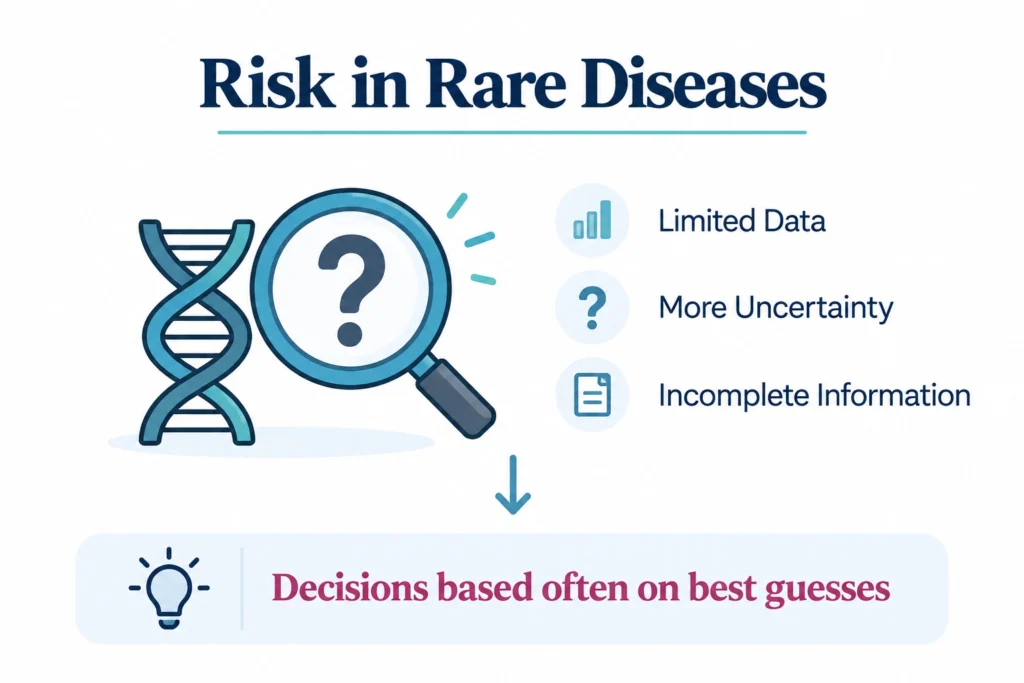
Risk takes on additional complexity in the context of rare diseases. Limited data, small patient populations, and variability in disease presentation can make risk more difficult to quantify.
Clinical trials in rare diseases often involve small numbers of participants, which means that estimates of risk may be less precise. As a result, uncertainty is often higher, and ongoing data collection, such as post-marketing surveillance, becomes particularly important.
Patients and clinicians may need to make decisions based on incomplete information, weighing potential risks against the lack of available treatment options.
Effective communication of risk is essential in healthcare. Poor communication can lead to misunderstanding, mistrust, and suboptimal decision-making.
Clear communication involves presenting both absolute and relative risk, providing context, and avoiding overly technical language. Visual aids, such as frequencies or percentages, can help make risk more understandable.
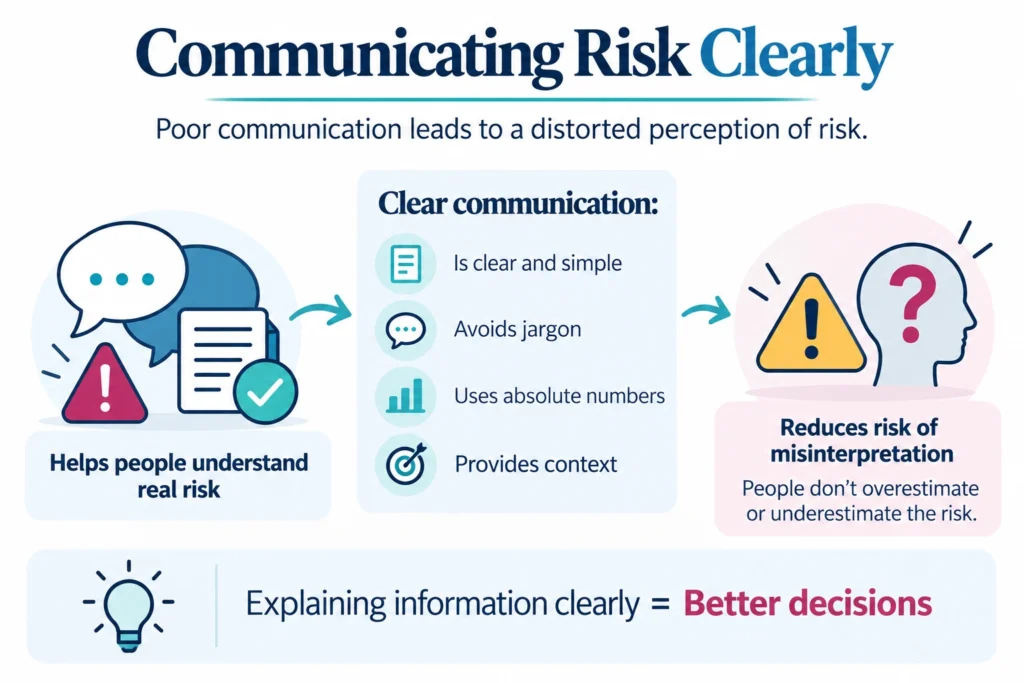
It is also important to acknowledge uncertainty. Not all risks can be quantified precisely, and being transparent about this uncertainty is part of responsible communication.
Understanding risk is fundamental to informed decision-making. It allows patients to weigh options, interpret medical information, and engage meaningfully in discussions about their care.
For healthcare professionals, it supports evidence-based practice and helps ensure that recommendations are aligned with both clinical evidence and patient values.
More broadly, improving public understanding of risk contributes to better health literacy. It enables individuals to interpret research findings, media reports, and policy decisions more critically and accurately.
Rather than viewing risk as something inherently negative, it is more accurate to see it as a tool for understanding uncertainty. It provides a structured way to evaluate what might happen, how likely it is, and what the consequences could be.
In healthcare, this perspective is essential. It allows decisions to be made not based on fear or assumption, but on a balanced assessment of evidence, probability, and impact.