News stories announcing the discovery of a “new gene linked to disease” appear with increasing frequency. For people living with rare conditions, their families, clinicians, and advocates, these headlines can provoke a mixture of hope, confusion, and cautious optimism. Gene discovery is often framed as a breakthrough, sometimes even as a step towards a cure. In reality, the meaning of such discoveries is more nuanced and far more incremental.
This article explains what a new gene discovery actually represents, how these findings are made, and what they do – and do not – change in real terms for patients and healthcare systems. Understanding this distinction matters, particularly in the rare disease space, where expectations are often shaped by long diagnostic journeys and limited treatment options.
In most cases, a “new gene discovery” does not mean that a gene has suddenly appeared or that it was previously unknown to science. Rather, it means that researchers have identified a new association between a gene and a disease or clinical phenotype.
Human genes have largely been mapped for decades. What changes over time is knowledge about what specific variants within those genes do, and how they contribute to disease. A discovery typically involves identifying a genetic variant that appears more frequently in individuals with a particular condition than in the general population.
This process is usually supported by advances in genomic technologies such as whole-exome sequencing and whole-genome sequencing. These tools allow researchers to analyse large volumes of genetic data and identify patterns that were previously invisible.
For background on how gene–disease associations are established, see:
https://www.genome.gov/genetics-glossary/Gene
One of the most important distinctions in genetics is the difference between association and causation.
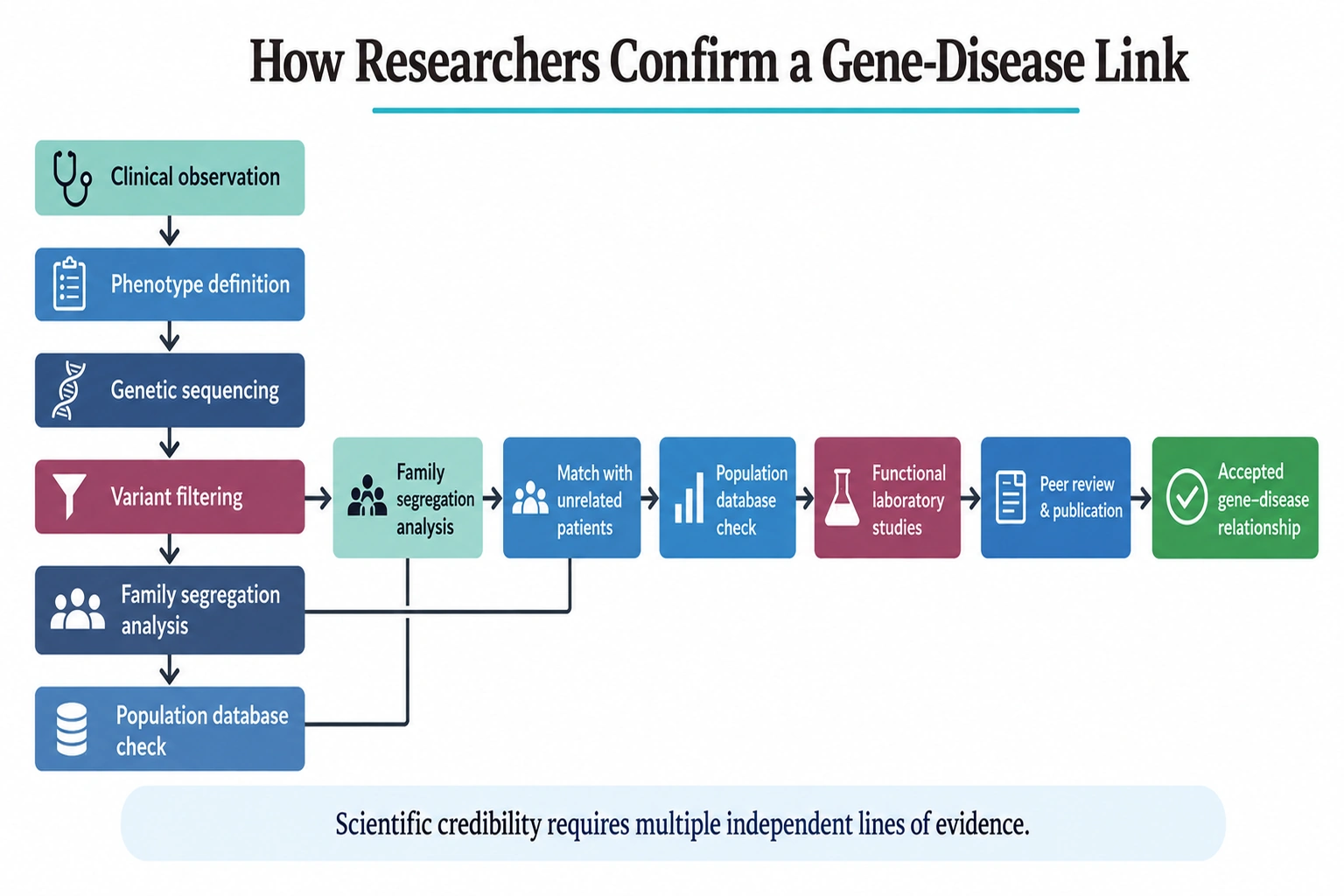
A newly identified gene variant may be statistically associated with a disease, but that alone does not prove it causes the condition. Further work is required to demonstrate:
Many initial discoveries are based on small cohorts, sometimes involving only a handful of families. Replication in larger and more diverse populations is essential before conclusions can be drawn.
This is why early gene discoveries are often described cautiously in the scientific literature, even when media coverage is enthusiastic.
Click for an overview of how genetic evidence is evaluated can be found here:
https://www.nature.com/subjects/genetic-association-study
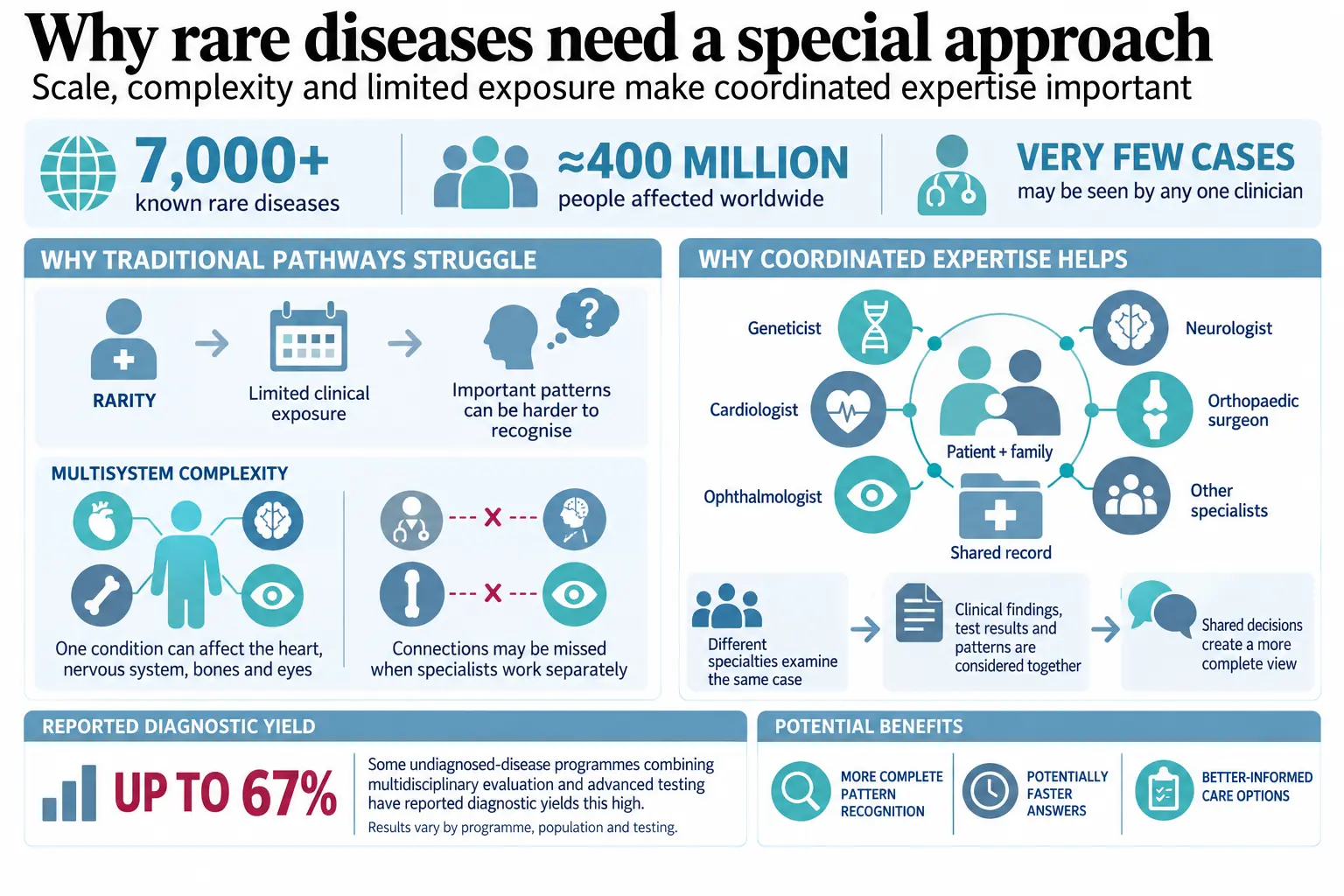
Rare diseases play a disproportionate role in advancing genetic knowledge. Many rare conditions are monogenic, meaning they are caused primarily by changes in a single gene. This makes them more amenable to genetic analysis than common diseases, which often involve complex interactions between multiple genes and environmental factors.
For families affected by rare diseases, gene discovery can finally provide an explanation for symptoms that may have gone unrecognised or misdiagnosed for years. From a scientific perspective, these discoveries also shed light on fundamental biological processes that can be relevant far beyond a single condition.
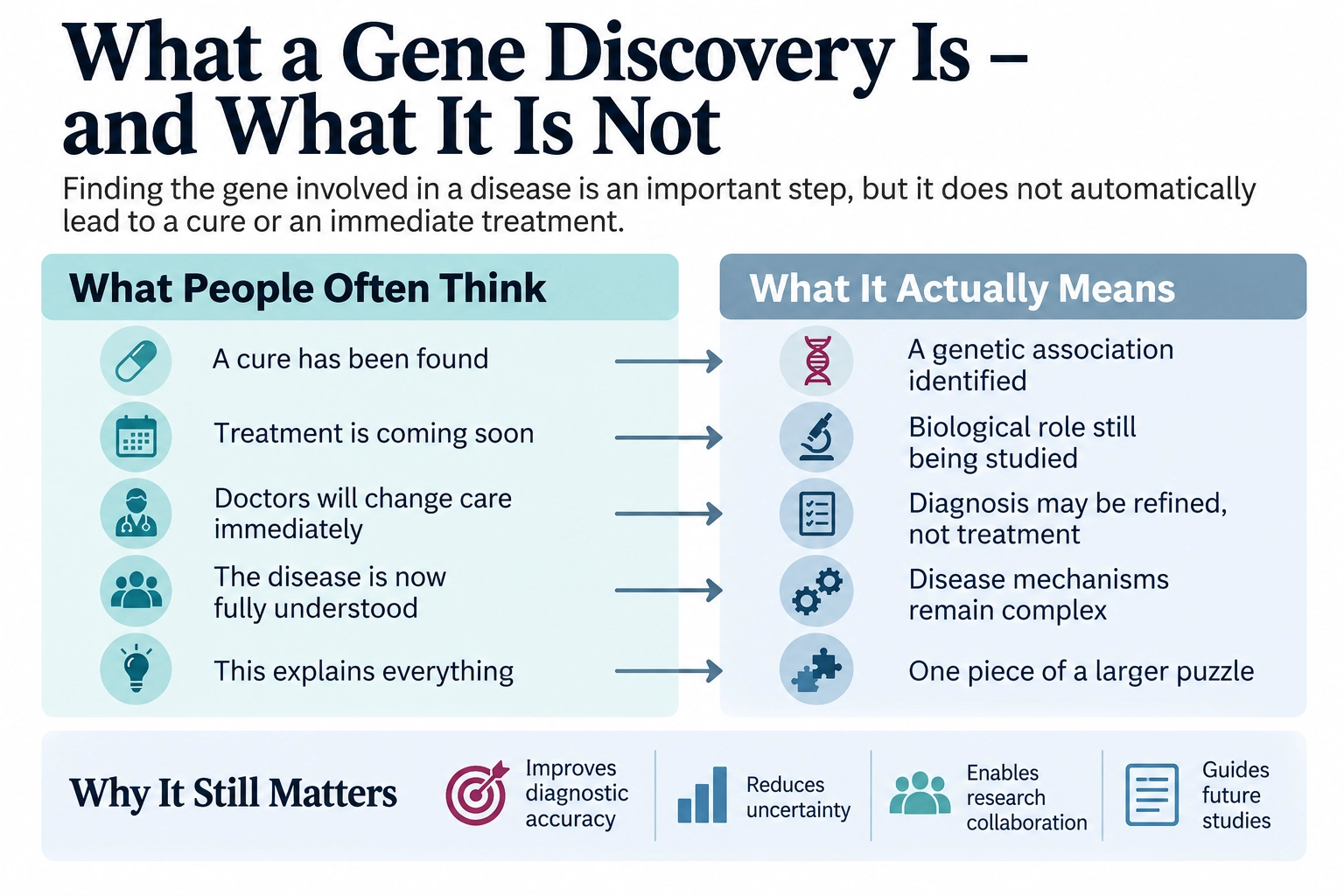
In the short term, the most common impact of a gene discovery is improved diagnostic clarity, not treatment.
A confirmed gene association can:
However, it rarely leads to an immediate change in clinical management. Many rare diseases remain managed through symptom control and supportive care, even after their genetic basis is understood.
For patients already diagnosed, a gene discovery may not alter day-to-day treatment at all. Its value often lies in validation, explanation, and future planning rather than immediate intervention.
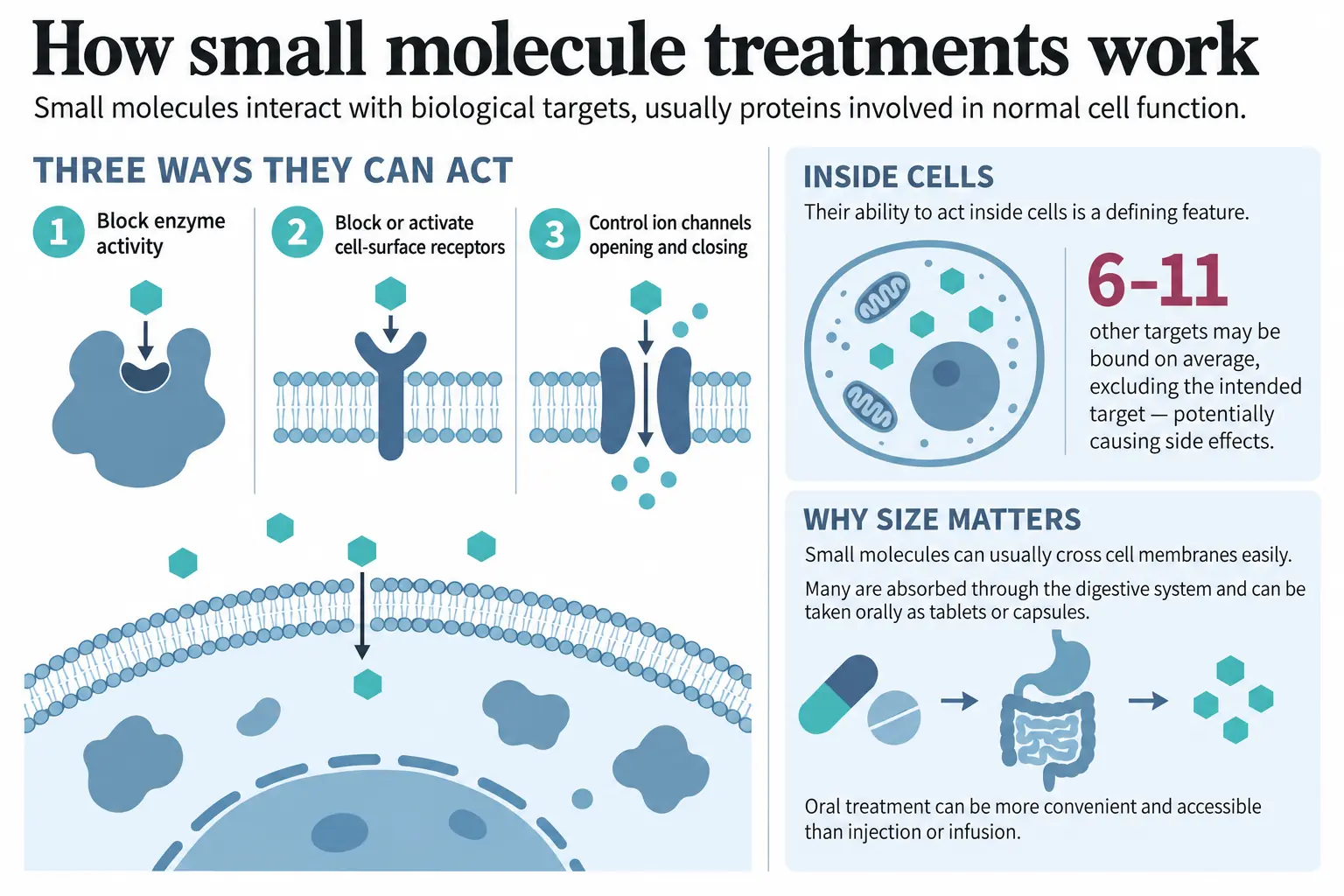
It is understandable that gene discoveries are sometimes interpreted as steps towards cures. In reality, most gene discoveries do not translate into treatments, at least not in the foreseeable future.
Developing a therapy requires:
This process typically takes many years and carries a high failure rate. Even when gene-based therapies are technically possible, they may not be appropriate for all patients, disease stages, or healthcare systems.
An accessible overview of drug development timelines can be found here:
https://www.fda.gov/patients/learn-about-drug-and-device-approvals/drug-development-process
Once a gene is implicated, researchers must conduct functional studies to understand what the gene does and how its disruption leads to disease. This often involves laboratory experiments using cell cultures, animal models, or computational simulations.
Functional studies are critical because they move research beyond correlation. They help determine whether a gene variant:
Without this work, a gene discovery remains a hypothesis rather than a foundation for clinical progress.
Even when they do not lead directly to treatment, gene discoveries play an important role in shaping the research landscape. Identifying a gene gives researchers a concrete focus around which to design studies, apply for funding, and build collaborations.
In rare disease research, this is particularly important. A defined genetic cause can:
Over time, these cumulative effects can make a meaningful difference, even if progress feels slow at an individual level.
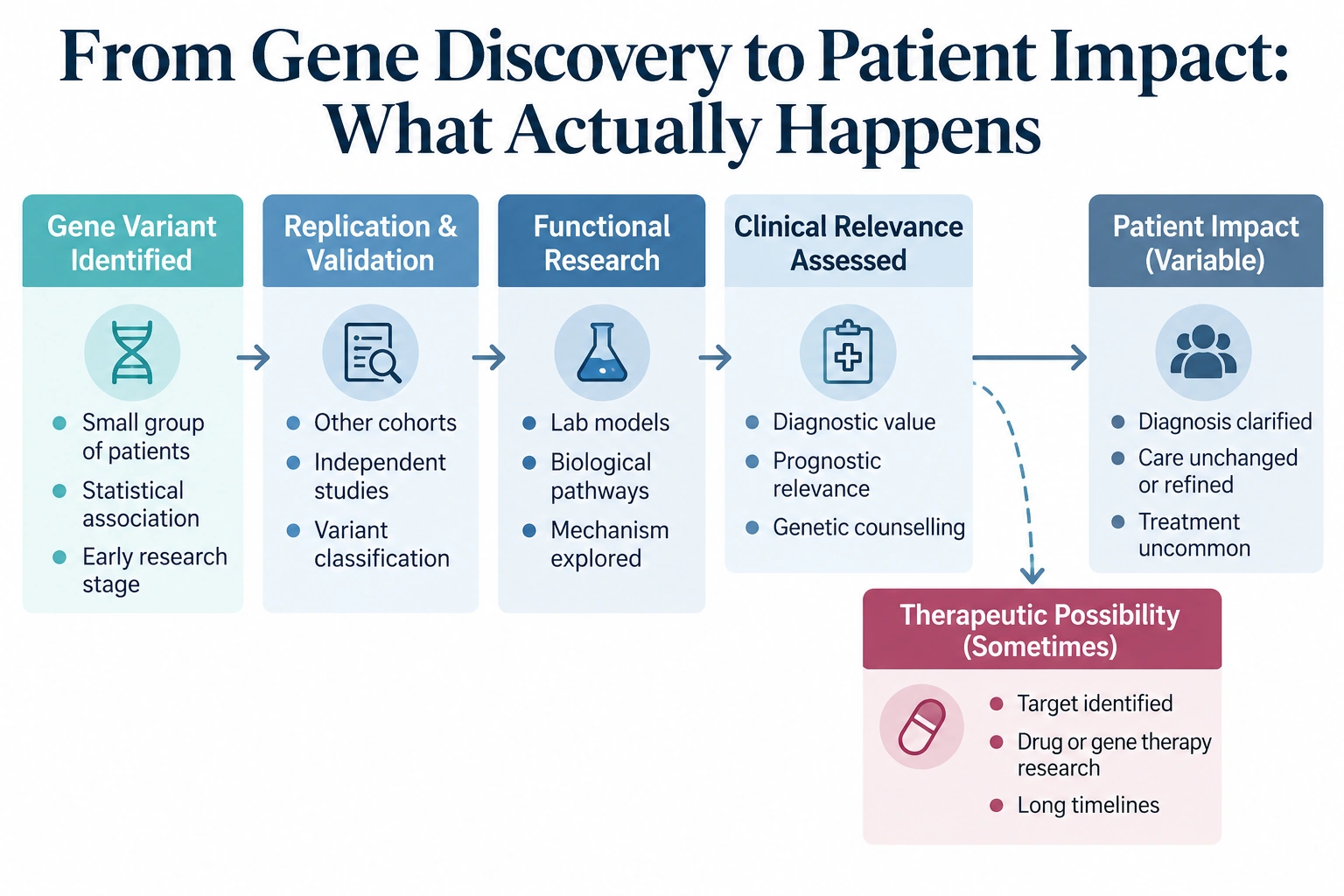
Many gene discoveries only become robust through international collaboration. Rare diseases, by definition, involve small patient populations, making data sharing essential.
Initiatives such as international variant databases and rare disease networks allow researchers to compare findings across borders and healthcare systems. This helps distinguish genuine disease-causing variants from coincidental findings.
Examples of such initiatives include:
https://www.matchmakerexchange.org/
https://www.clinicalgenome.org/
Without these collaborative efforts, many gene discoveries would remain isolated observations rather than validated scientific knowledge.
One of the challenges in rare disease research is how discoveries are communicated. Simplified headlines can unintentionally create unrealistic expectations, particularly when words like “breakthrough” or “cure” are used prematurely.
Clear communication should distinguish between:
For families living with rare conditions, honesty and clarity are more valuable than optimism unsupported by evidence. Accurate explanations help people make informed decisions and reduce the emotional toll of repeated disappointment.
Despite these limitations, gene discovery remains a critical part of progress in rare disease research. Each finding adds to a growing body of knowledge that improves understanding of human biology and disease.
Even when a discovery does not lead directly to treatment, it can:
In rare disease science, progress is often cumulative rather than dramatic. Small, well-grounded advances are what ultimately change outcomes over time.
A new gene discovery should be understood as a starting point. It marks the beginning of a deeper investigation into mechanisms, patterns, and possibilities. It is not a guarantee of treatment, and it rarely changes clinical care overnight.
For patients and families, this perspective can be difficult but empowering. Understanding what a discovery represents allows people to engage with research realistically, advocate effectively, and make informed choices without relying on inflated expectations.
At Rare Disease Watch, the goal is to place these discoveries in proper context: recognising their scientific importance while explaining their real-world implications with accuracy and care.