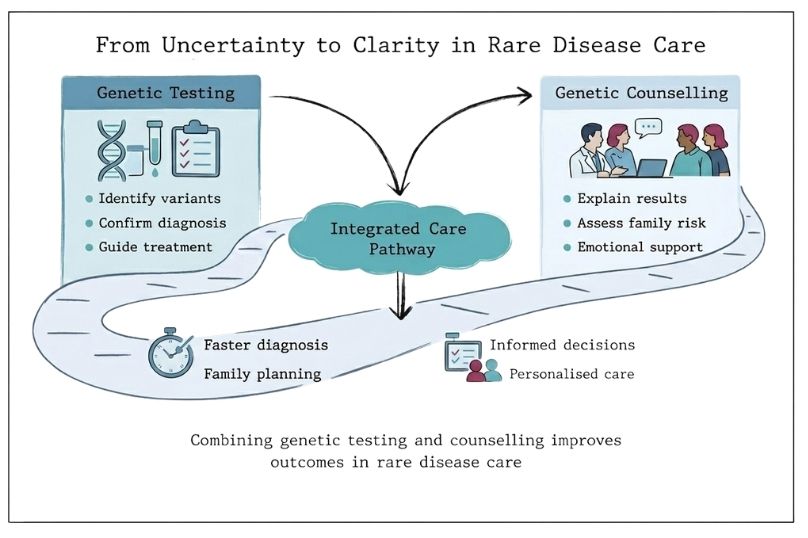
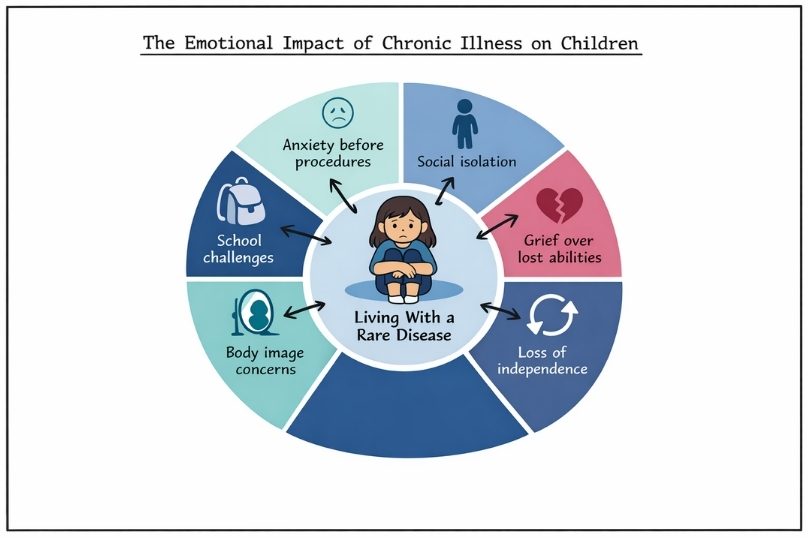
When a condition is described as genetic, one of the next questions is usually: Can it be passed on? Who in the family might get it? And what are the chances for children or other family members? This is where inheritance patterns come in.
Inheritance patterns are not predictions of what will happen to an individual. They are just ways to describe how genetic changes are passed down through families. Understanding them helps make sense of risk, variability, and why the same condition can appear differently across generations.
This article explains what inheritance patterns mean, how they are used, and why they are guides rather than guarantees.
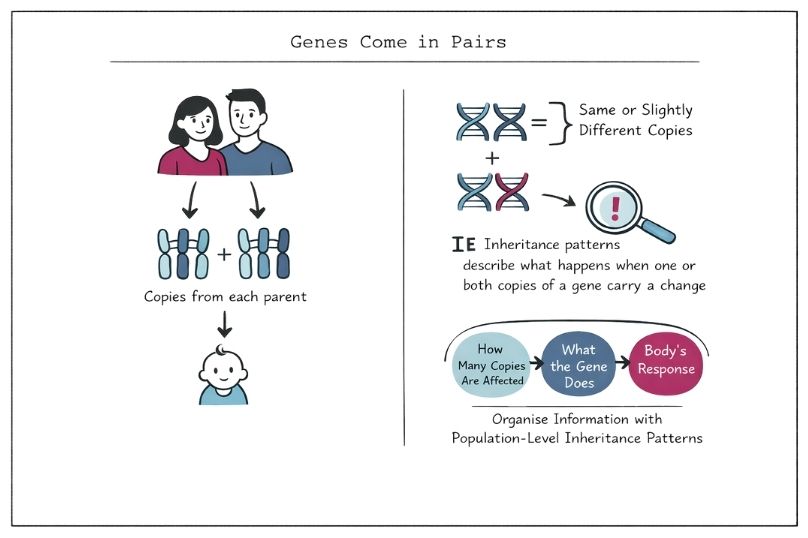
Most genes come in pairs, with one copy inherited from each parent. These copies can be the same or slightly different. Inheritance patterns describe what happens when one or both copies of a gene carry a change that affects how the gene works.
Whether a genetic condition develops depends on how many copies are affected, what the gene does, and how your body responds to it. Inheritance patterns help organise this information into understandable categories.
It is important to remember that inheritance patterns describe population-level behaviour. They do not determine outcomes for anyone with certainty.
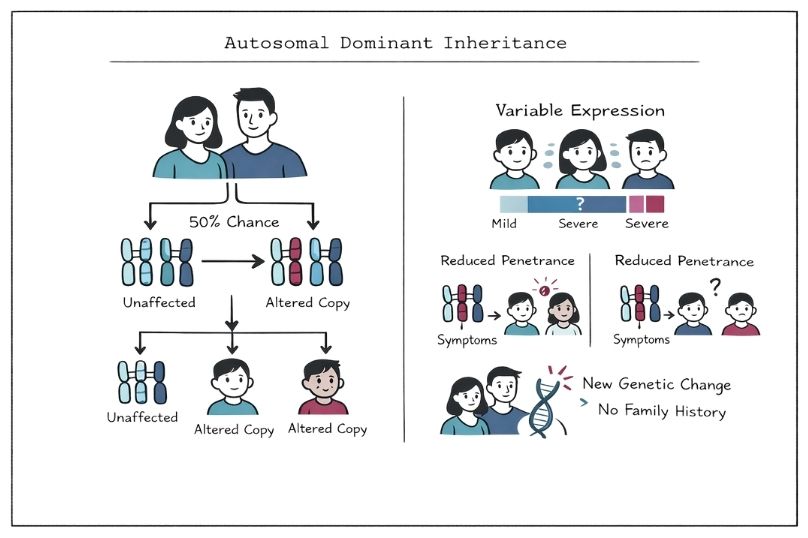
In autosomal dominant inheritance, a change in just one copy of a gene is enough to increase the likelihood of a condition developing.
An individual with an autosomal dominant condition has one altered copy and one typical copy of the gene. Each child of an affected parent has a 50% chance of inheriting the altered copy (and potentially the condition). However, inheriting the gene does not always mean developing symptoms the same way; some get mild effects, some severe, some none at all.
This is known as variable expression (with different severity) and reduced penetrance (not everyone with the gene shows signs). It explains why some people in a family may be severely affected, while others with the same genetic change have mild or no symptoms.
Autosomal dominant conditions often appear in multiple generations, but they can also arise for the first time through a new genetic change without family history.
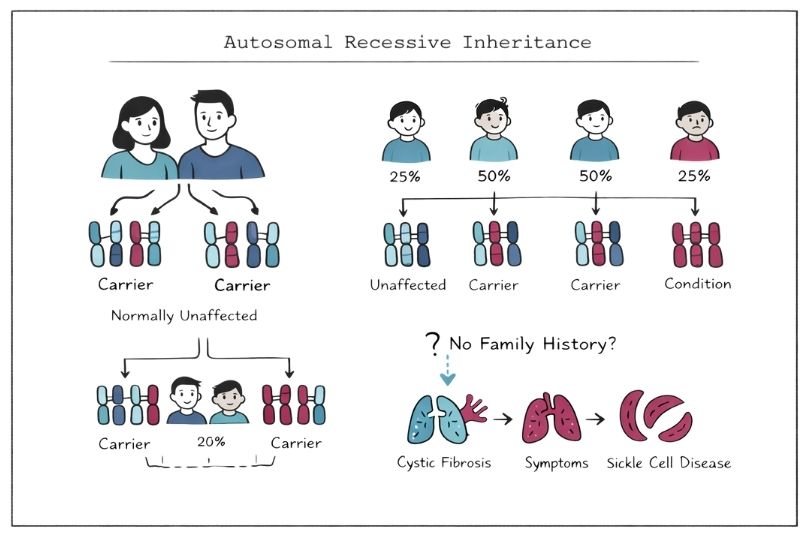
Autosomal recessive inheritance requires changes in both copies of a gene (one from each parent)to develop the condition.
Parents usually carry one altered copy and one typical copy of the gene. They are known as carriers and typically have no symptoms. When two carriers have a child, there is a chance the child will inherit both altered copies and develop the condition.
Because carriers are unaffected, autosomal recessive conditions can appear unexpectedly in families with no known history of the condition. They may seem to skip generations or appear suddenly. This pattern highlights why the absence of family history does not rule out a genetic condition. Common examples are cystic fibrosis and sickle cell disease.
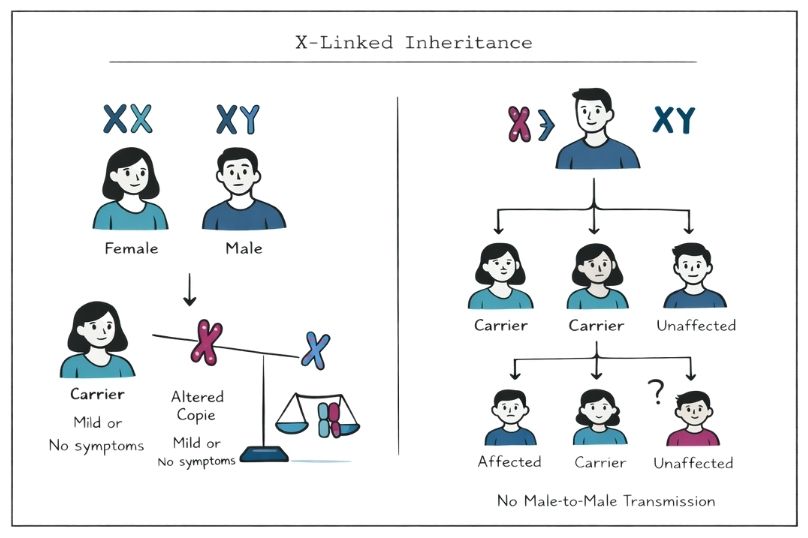
X-linked inheritance involves genes located on the X chromosome.
People with two X chromosomes have two copies of these genes, while people with one X chromosome have only one(Females have two X's; males have one X and one Y). This difference affects how X-linked conditions appear.
If a gene on the X chromosome is altered, individuals with only one X chromosome are more likely to show symptoms, because they do not have a second copy to compensate. Individuals with two X chromosomes may be carriers or may have mild or no symptoms, depending on how the gene is expressed.
X-linked conditions often show characteristic patterns in families, but these patterns can still vary widely. Fathers can't pass X-linked traits to sons (no male-to-male transmission). Daughters of affected men usually carry it.
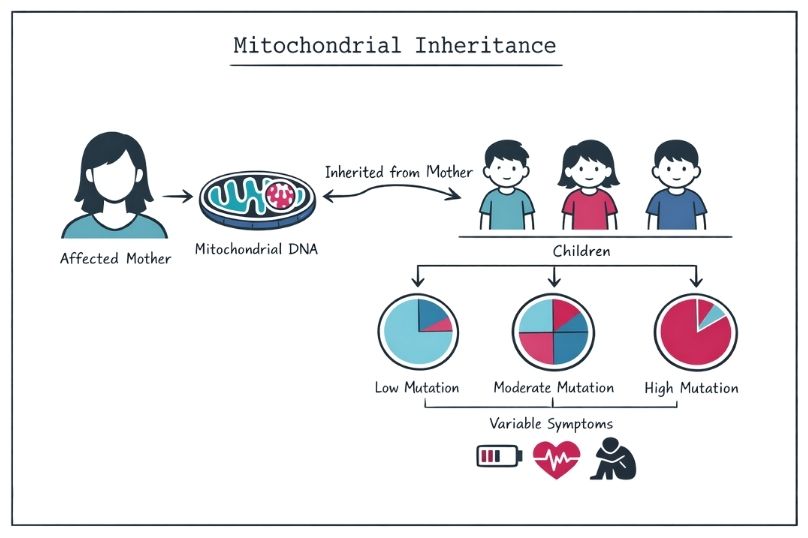
Some genetic conditions involve genes found in mitochondria, the structures in cells responsible for energy production.
Mitochondrial DNA is inherited almost exclusively from the mother. This means conditions caused by mitochondrial gene changes can be passed from mother to child, regardless of the child’s sex.
But not all children of an affected mother will end up with the same level of symptoms. The proportion of altered mitochondrial DNA can vary between cells and tissues, resulting in a wide range of symptoms and varying severity.
This kind of variability makes it really hard to predict how mitochondrial inheritance will play out.
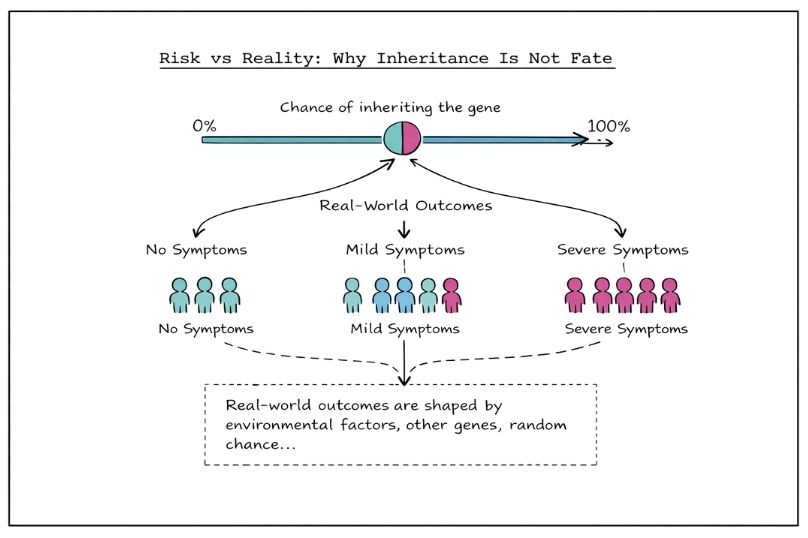
One of the most important things to understand about inheritance patterns is that they describe probability, not fate.
A stated chance of inheritance does not mean a condition will or will not occur in a specific individual. It reflects statistical likelihood across many families. Real life rarely follows simple patterns. Environmental factors, other genes, random biological variation, and pure chance play a role. Two people with the same inherited change can have totally different outcomes.
That's why Inheritance patterns are tools for risk assessment, not predictions.
Many genetic conditions do not follow a single, clear inheritance pattern.
Some conditions involve multiple genes, each contributing a small effect. Others involve a combination of inherited and newly arisen genetic changes. Some show incomplete penetrance, meaning not everyone with the genetic change develops symptoms.
There are also conditions strongly influenced by the environment, even when a genetic component is present. In these cases, inheritance patterns provide only part of the picture. This complexity is why genetic counselling focuses on explanation, and not just simple yes or no answers.
Understanding inheritance patterns can help families make informed decisions, but it can also raise emotional questions.
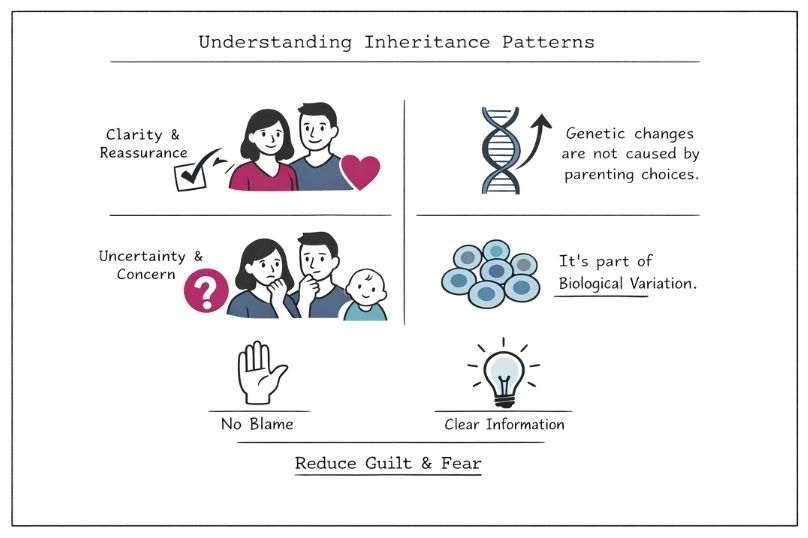
For some, learning about inheritance provides clarity and reassurance. For others, it brings uncertainty or concern about future children or relatives.
It is important to emphasise that inheritance patterns don't mean anyone is responsible or to blame. Genetic changes are not caused by parenting choices or actions. They are part of biological variation.
Clear explanations help reduce misunderstanding and prevent unnecessary guilt or fear.
Inheritance patterns can also help doctors narrow down possible diagnoses.
When a condition appears in multiple generations, affects siblings in a particular way, or shows a sex-linked pattern, inheritance information can guide genetic testing and interpretation.
However, inheritance patterns are only one piece of evidence. They must be considered alongside clinical features, test results, and family history.
As genetic testing becomes more widely available, inheritance patterns remain key to interpreting what the tests show.
Inheritance patterns are frequently oversimplified in popular explanations. Diagrams can give the impression of certainty and predictability that does not exist in real life.
Terms such as dominant and recessive can also be misleading if taken too literally. Dominant does not mean worse; recessive does not mean rare or insignificant. These terms describe how genes behave, not how conditions feel or affect daily life. Clear communication is essential to avoid misinterpretation.
As genetic knowledge expands, inheritance patterns are becoming more nuanced rather than less relevant.
New discoveries continue to reveal how genes interact, how expression varies, and why traditional categories sometimes fall short. At the same time, inheritance patterns remain a valuable starting point for understanding genetic risk.
Bottom line: inheritance patterns help explain how genetic changes travel through families, why outcomes differ, and why nothing is 100% certain.
When used effectively, they support informed discussion, realistic expectations, and a better understanding of genetic conditions without oversimplifying the complexity of human biology.
If this hits home for you or your family, reach out to pros like genetic counsellors. You're not alone in figuring this out.