
A clear guide to genetic inheritance patterns, explaining how conditions are passed through families and why outcomes can vary across generations.
Understanding rare disease science and policy should not require a degree in genetics or medicine. The Explainer Library has been created to help every reader follow essential concepts with confidence. Each guide is short, plain language, and focused on one topic at a time. The aim is to remove confusion, reduce technical barriers, and support informed reading across all sections of Rare Disease Watch.
You will find clear explanations of topics such as the meaning of a rare disease, how genetic testing works, why some conditions run in families, how clinical research is designed, and what terms like prevalence, biomarkers, and endpoints actually signify in practice. These resources are written to support patients, families, researchers, students, and anyone curious about this complex field.
New explainers are added regularly and updated as understanding evolves. Readers can browse individual topics or search for the concepts they want to explore further.
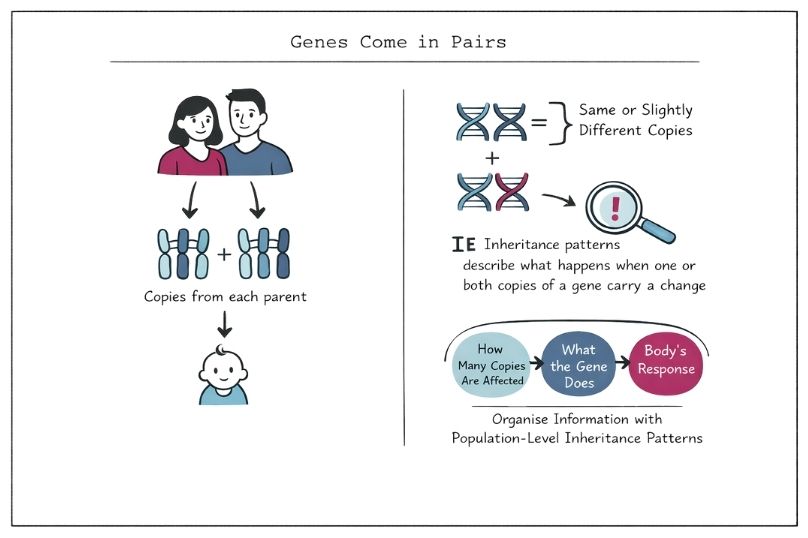 Understanding Inheritance Patterns in Genetic Conditions
A clear guide to genetic inheritance patterns, explaining how conditions are passed through families and why outcomes can vary across generations.
 Support For Rare Disease Patients and Families
Rare disease support: NORD, Global Genes, peer groups, financial help, insurance guidance, and online communities to fight isolation.
 Telehealth for Rare Diseases: How Remote Care Makes a Difference
Telehealth is transforming rare disease care by improving access to specialists, supporting remote monitoring, and reducing barriers to care.
 Understanding Rare Diseases: An Overview of Definitions and Prevalence
Discover how rare diseases are defined worldwide, why definitions differ, and what current data reveals about prevalence, diagnosis delays, and the treatment gap.
 How Many Rare Diseases Are There? Understanding the Global Numbers
Learn why estimates place rare diseases between 7,000 and 10,000 worldwide, how definitions differ, and how genomics is reshaping our understanding of prevalence.