Hundreds of rare inherited diseases are caused by the absence or deficiency of a specific enzyme. Enzyme replacement therapy (ERT) is used to manage these conditions by administering a laboratory-produced version of the missing enzyme to help restore normal metabolic function. While early treatments used enzymes extracted from human or animal tissues, most modern ERTs use enzymes produced in specialised laboratory facilities. By replacing the deficient enzyme, ERT can reduce the build-up of harmful substances and slow disease progression. While it does not cure the underlying genetic condition, it can play an important role in managing the disease and improving quality of life.
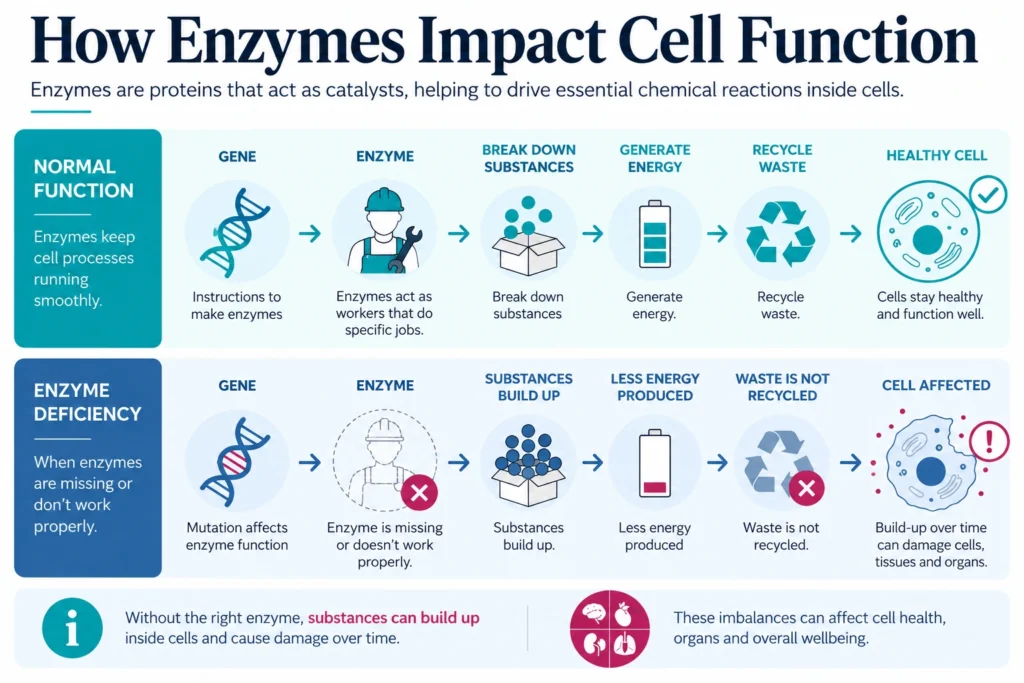
Enzymes are proteins that act as biological catalysts. They enable and regulate chemical reactions that are essential for normal cellular function. They play essential roles in processes such as breaking down nutrients, generating energy, and recycling cellular waste.
Each enzyme has a specific role. When an enzyme is missing, deficient, or does not function properly due to a genetic mutation, the process it controls becomes disrupted. As a result, substances that would normally be broken down can accumulate to harmful levels, while important products the body needs may not be produced in sufficient amounts.
Over time, these imbalances can damage cells, tissues, and organs, leading to the symptoms and complications associated with many rare metabolic disorders.
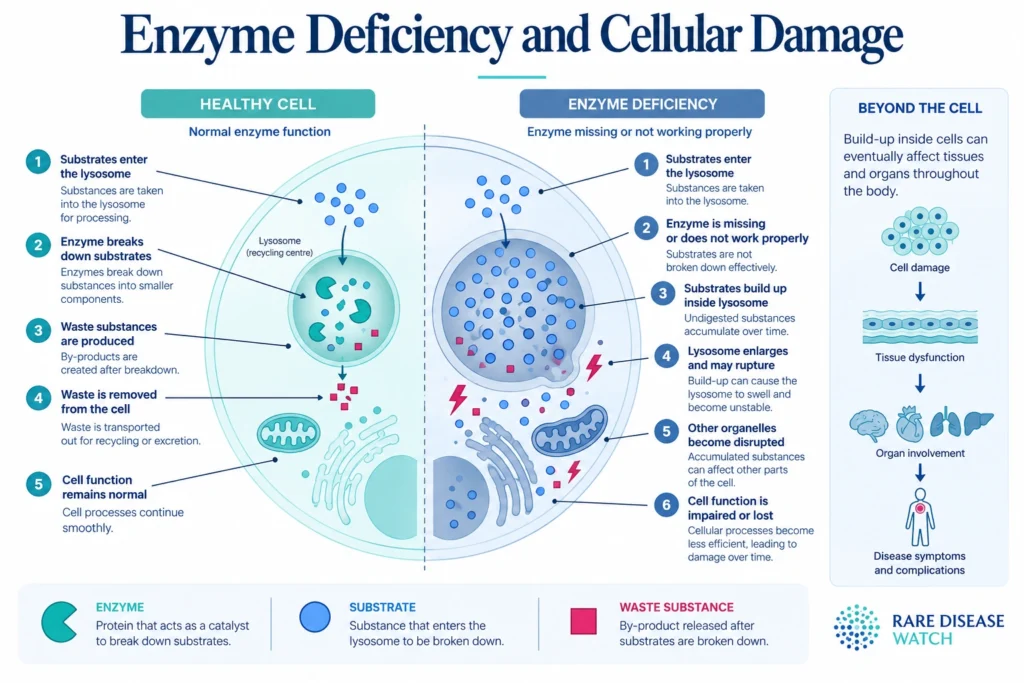
In many rare genetic conditions, particularly metabolic disorders, a mutation in a gene leads to absence or deficiency of a specific enzyme. As a result, substrates that would normally be processed by that enzyme accumulate within cells.
In lysosomal storage disorders, for example, these substances accumulate inside lysosomes, which are the cell’s recycling centres. This accumulation can damage cells, tissues, and organs, leading to a wide range of symptoms depending on where the build-up occurs.
The severity and progression of disease often depend on the degree of enzyme deficiency and the organs and tissues affected.
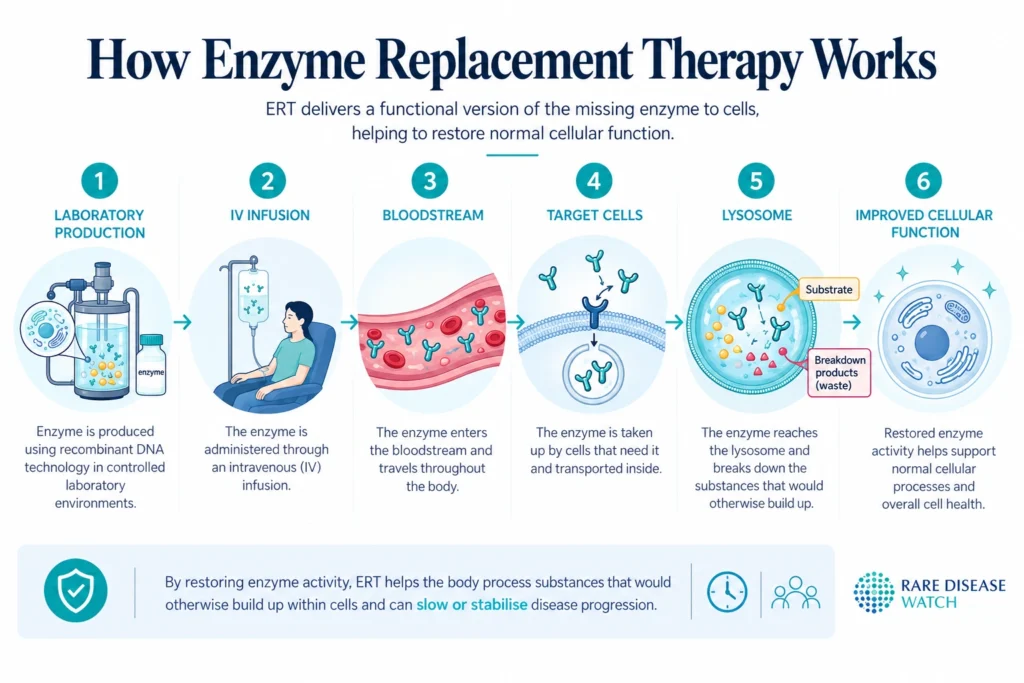
ERT works by introducing a functional version of the missing enzyme into the body. These enzymes are typically produced using recombinant DNA technology in controlled laboratory environments using genetically engineered cells. They are designed to remain active in the body for longer, resist being broken down too quickly, and reach specific tissues or organs
The treatment is usually administered through an intravenous (IV) infusion, allowing the enzyme to enter the bloodstream and reach cells throughout the body. It is then transported to the lysosomes or other relevant cellular compartments, where it can begin to perform its intended function.
By restoring enzyme activity, ERT helps reduce the accumulation of harmful substances and can slow or stabilise disease progression.
ERT is used to treat several rare genetic disorders, particularly lysosomal storage disorders. Examples include Gaucher disease, Fabry disease, Pompe disease, and certain types of mucopolysaccharidoses. Some of the approved ERTs for these conditions are listed below.
| Disease | Associated problem | Missing or Deficient Enzyme | Approved ERT Enzyme |
| Gaucher Disease | Fatty substances (glucocerebroside) build up in cells, particularly in the spleen, liver, bone marrow, and bones. This leads to enlarged organs, bone disease, and low blood cell counts. | β-glucocerebrosidase | Imiglucerase |
| Fabry Disease | A fatty substance called globotriaosylceramide (Gb3) accumulates in blood vessels and organs. This affects the kidneys, heart, nervous system, and skin. | α-galactosidase A | Agalsidase beta |
| Pompe Disease | Glycogen accumulates inside muscle cells, causing progressive muscle weakness and affecting the heart and breathing muscles. | Acid α-glucosidase | Alglucosidase alfa |
| Mucopolysaccharidosis type I | Complex sugar molecules called glycosaminoglycans (GAGs) build up in tissues, leading to problems affecting the bones, joints, heart, eyes, and other organs. | α-L-iduronidase | Laronidase |
In many of these disorders, the underlying genetic mutation is confirmed through tests such as whole genome sequencing (WGS). This helps confirm the diagnosis and determine whether ERT is an appropriate treatment option. Earlier diagnosis can enable timely treatment before significant disease progression occurs.
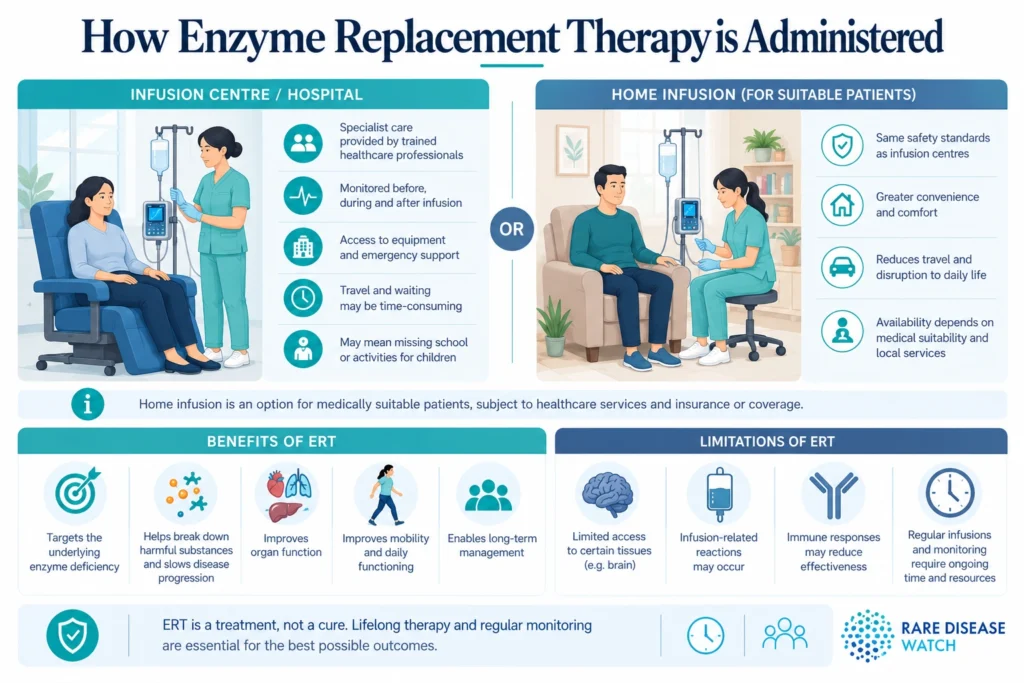
ERT is typically administered through regular intravenous (IV) infusions, usually every one to two weeks, depending on the condition being treated and the specific therapy prescribed. Infusions may be given in a hospital, specialist clinic, dedicated infusion centre, or, for some patients, at home under the supervision of a trained healthcare professional.
Many patients receive treatment at infusion centres, where healthcare professionals prepare and administer the therapy while monitoring patients before, during, and after the infusion. Although these centres provide specialist care, travelling to appointments and waiting for treatment can be time-consuming. For children, regular infusions may also mean missing school or other activities.
For medically suitable patients, home infusion may be an option. Home infusions follow the same safety protocols as those provided in hospitals or infusion centres, with appropriate monitoring throughout the treatment. Receiving ERT at home can reduce travel time, minimise disruption to daily life, and provide a more comfortable treatment experience. Studies have shown that many patients report greater convenience and higher treatment satisfaction with home-based infusions. However, availability depends on factors such as the patient's medical condition, local healthcare services, and insurance or healthcare coverage.
Care is typically coordinated through specialist centres with expertise in rare metabolic disorders. These centres diagnose the condition, initiate treatment, and provide ongoing monitoring. They also coordinate multidisciplinary care and help patients access appropriate therapies and support services.
The benefits of ERT vary depending on the condition being treated, but may include:
Despite its benefits, ERT has limitations, including:
Research continues to improve ERTs and expand treatment options for people living with rare metabolic disorders. Scientists are developing therapies that can reach a wider range of tissues and organs, including the brain and nervous system, where many current ERTs have limited effectiveness.
Researchers are also exploring complementary and alternative approaches, including gene therapy, which aims to enable the body to produce the missing enzyme, and substrate reduction therapy, which reduces the production of substances that accumulate because of enzyme deficiency. These emerging therapies may enhance or, in some cases, provide alternatives to ERT in the future.
ERT reflects a broader shift towards more precise and mechanism-based treatments in medicine. By focusing on the specific defect causing a disease, it offers a more rational and effective approach than general symptom management alone.
In the context of rare diseases, where treatment options are often limited, ERT is a key example of how scientific understanding can be translated into meaningful clinical benefit.