Amyotrophic Lateral Sclerosis (ALS) is a progressive neurodegenerative disorder characterised by the gradual loss of motor neurons in the brain and spinal cord. These motor neurons are responsible for initiating and controlling voluntary muscle movement. As they degenerate, individuals with ALS develop progressive muscle weakness, leading to paralysis and, ultimately, respiratory failure.
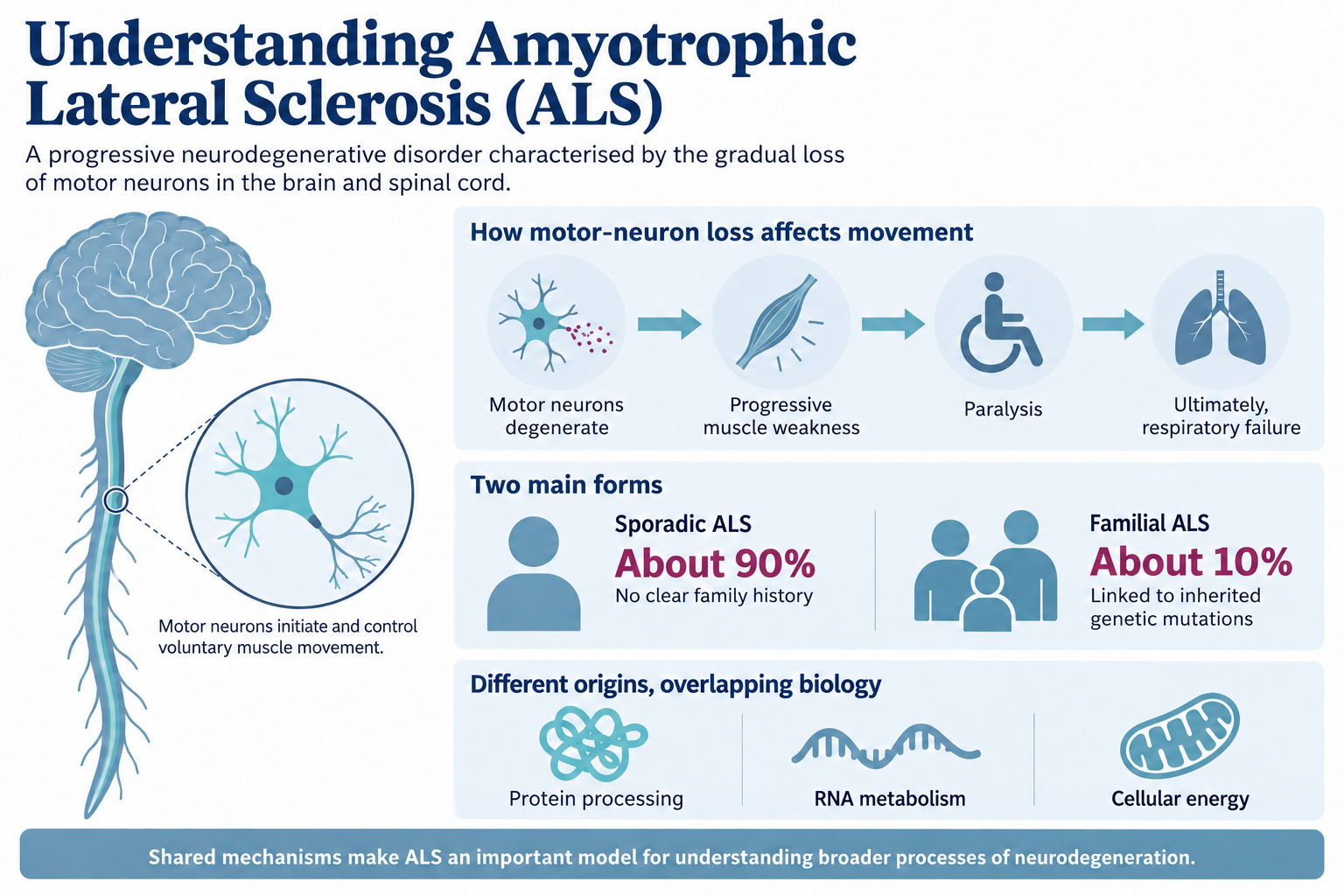
ALS exists in two main forms:
Despite this distinction, both forms share many biological mechanisms, including disruptions to protein processing, RNA metabolism, and cellular energy. This overlap makes ALS not only a devastating condition but also a critical model for understanding the broader processes of neurodegeneration.
Motor neurons are specialised nerve cells that transmit signals from the central nervous system (brain) to skeletal muscles, allowing us to move voluntarily.
They are divided into two main types:
Together, they form the communication pathway that allows the body to move with intention and control.
In Amyotrophic Lateral Sclerosis (ALS), both upper and lower motor neurons are progressively lost. This dual involvement leads to a combination of clinical features, including muscle weakness, stiffness (spasticity), twitching, and reduced coordination.
As motor neurons die, the connection between the brain and muscles is disrupted. Without these signals, muscles gradually weaken, shrink (atrophy) through disuse, and can no longer perform even basic tasks. This communication breakdown is the hallmark of ALS and explains why the disease steadily erodes mobility and independence.
For additional clinical background on motor neuron disease pathways, refer to the National Health Service (UK).

Although ALS can appear clinically uniform, it is genetically and molecularly diverse. In familial ALS, several genes have been identified, including SOD1, C9orf72, TARDBP, and FUS. These genes are involved in a range of cellular processes, such as protein folding, RNA processing, and intracellular transport.
These genetic mutations help explain why ALS can run in families, though most cases remain sporadic.
For a detailed scientific review of the genetic and molecular mechanisms of ALS, see this StatPearls article.
One of the most studied mechanisms involves protein misfolding and aggregation. Mutant proteins, such as abnormal SOD1 or TDP-43, accumulate within neurons, forming toxic inclusions that disrupt the cell’s ability to function. These aggregates interfere with essential processes, like protein degradation pathways and axonal transport.
RNA metabolism is another key pathway. Proteins such as TDP-43 and FUS normally help manage RNA splicing, transport, and stability. In ALS, these processes become dysregulated, leading to altered gene expression and impaired neuronal function.
Mitochondrial dysfunction is also a significant feature. Motor neurons in ALS show reduced energy production, increased oxidative stress, and poor calcium regulation. Because motor neurons have high energy demands, these changes contribute to cellular vulnerability and eventual degeneration.
In addition, excitotoxicity plays a role. Excessive stimulation by the neurotransmitter glutamate leads to increased calcium influx, triggering pathways that damage neurons. This mechanism has guided some therapeutic approaches aimed at reducing glutamate activity and protecting neurons from overstimulation.

Motor neurons are particularly susceptible to degeneration in ALS due to their unique structural and functional characteristics. They are among the longest cells in the body, with axons that can stretch more than a metre in length. Maintaining these long projections requires efficient transport systems and a constant supply of energy.
Disruptions in axonal transport, protein homeostasis, or energy metabolism therefore have a disproportionate impact on motor neurons. In addition, their reliance on tightly regulated excitatory signals makes them vulnerable to excitotoxic damage. This is a process in which excessive stimulation by the neurotransmitter glutamate causes dangerous levels of calcium to enter the cell, leading to damage and eventual cell death.
Glial cells, including astrocytes and microglia, also contribute to disease progression. In ALS, these supporting cells can become reactive and release inflammatory molecules that worsen neuronal injury. This shows that ALS is not only a disease of motor neurons themselves but also of the broader cellular environment, where interactions between neurons and supporting cells drive neurodegeneration.

Amyotrophic Lateral Sclerosis (ALS) usually begins in adulthood, although the age of onset can vary. Early symptoms often include focal muscle weakness, which may begin in the limbs or in muscles involved in speech and swallowing.
There are two common patterns of onset:
As the disease advances, muscle weakness gradually spreads to other parts of the body. Muscles become smaller and weaker (atrophy), and people may notice involuntary twitching called fasciculations.
Because both upper and lower motor neurons are affected, individuals often experience a combination of symptoms:
Importantly, sensory function is generally preserved, which helps distinguish ALS from other neurological conditions that affect both movement and sensation. Further clinical symptom breakdown is available from the Mayo Clinic.
Respiratory muscle weakness is a critical aspect of ALS progression. The diaphragm and intercostal muscles gradually lose strength, reducing the ability to breathe effectively and maintain adequate oxygen levels.
Early signs may include shortness of breath during physical activity or disturbed sleep due to inadequate breathing (hypoventilation). As respiratory function declines, individuals may require non-invasive ventilation (such as BiPAP machines) to support breathing. In later stages, more advanced respiratory support may become necessary.
Respiratory failure is the most common cause of death in ALS, typically occurring within three to five years of symptom onset. However, survival times vary widely, with some individuals living significantly longer depending on factors such as age at onset, site of symptom presentation, and access to multidisciplinary care.

While Amyotrophic Lateral Sclerosis (ALS) has traditionally been viewed as a disease that only affects movement, research now shows that a subset of individuals also experience cognitive and behavioural changes. These may include difficulties with planning and decision‑making (executive function), language, and social understanding.
In some cases, ALS overlaps with frontotemporal dementia (FTD), particularly in individuals with C9orf72 genetic mutations. This overlap reflects shared molecular mechanisms and demonstrates that ALS can extend beyond motor neuron disease, affecting broader networks in the brain. Recognising these changes is important, as they can influence both clinical management and the caregiving experience.
ALS does not follow a single predictable course. Its presentation and progression vary widely between individuals. Some individuals experience a rapid decline in muscle strength and function, while others progress slowly.
Several factors influencing this variability include genetic background, the site of symptom onset (limb vs. bulbar), and environmental influences.
Familial ALS may appear earlier and follow different patterns depending on the specific mutation involved. However, even within the same family, there can be significant differences in disease expression.
Diagnosing ALS is primarily a clinical process, based on the presence of both upper and lower motor neuron signs and the careful exclusion of other neurological conditions.
Electromyography (EMG) and nerve conduction studies are used to assess muscle activity and nerve function, helping to detect the characteristic patterns of motor neuron degeneration. Imaging, such as magnetic resonance imaging (MRI), may be used to rule out alternative diagnoses.
Research into biomarkers is advancing rapidly, with efforts to identify blood or cerebrospinal fluid markers, as well as neuroimaging techniques, that can aid in early diagnosis, track disease progression, and improve monitoring in clinical trials. While no single biomarker has yet been validated for routine use, these efforts hold promise for making diagnosis more precise and timely in the future.
There is currently no cure for Amyotrophic Lateral Sclerosis (ALS), and treatment focuses on slowing disease progression and managing symptoms to improve quality of life.
Two of the main medications that have been specifically approved for ALS:
Supportive care is a vital part of ALS management. This includes physiotherapy to preserve strength and mobility, speech and language therapy to support communication, nutritional support to prevent weight loss, and respiratory care to address breathing difficulties. As the disease advances, assistive technologies such as communication devices and mobility aids play a vital role in preserving independence.
Research into ALS is advancing quickly. Scientists are exploring several promising directions, including:
Together, these efforts reflect a growing understanding of ALS at the molecular level and a commitment to developing therapies that go beyond symptom management, aiming to slow or even halt the disease process.
Ongoing clinical trials can be explored via ClinicalTrials.gov
ALS demonstrates how diverse genetic and environmental factors can converge on common biological pathways that drive neurodegeneration. These include:
Understanding these shared mechanisms is critical for developing therapies that can address the disease more broadly, instead of focusing only on individual genetic mutations.
ALS also highlights the importance of systems-level interactions, where dysfunction in neurons, glial cells, and the immune system collectively contributes to disease progression.
Effective management of Amyotrophic Lateral Sclerosis (ALS) requires a coordinated, multidisciplinary approach. Specialist clinics often include neurologists, respiratory physicians, physiotherapists, occupational therapists, dietitians, and palliative care teams. This collaborative approach ensures that all aspects of ALS, physical, nutritional, respiratory, and emotional, are addressed together in a coordinated and comprehensive way.
Early intervention can improve quality of life and extend survival. For example, the timely introduction of nutritional support can help prevent weight loss and maintain strength, while proactive respiratory care can reduce complications and improve comfort and quality of life.
Psychological and social support are also essential. Living with ALS often brings many emotional and practical challenges for both individuals and families. Access to counselling, peer support groups, and community resources can help cope with the impact of the disease on daily life and relationships.
Amyotrophic Lateral Sclerosis (ALS) is a complex neurodegenerative disorder characterised by the progressive loss of motor neurons, leading to muscle weakness, paralysis, and ultimately respiratory failure. It exists in both sporadic and familial forms, with diverse genetic and molecular mechanisms.
At a mechanistic level, ALS provides insight into fundamental processes of neurodegeneration, including protein aggregation, RNA dysregulation, mitochondrial dysfunction, and neuroinflammation. These insights have broader relevance across neurological diseases.
While current treatments remain limited, advances in research are opening new avenues for gene‑targeted therapies, neuroprotective strategies, and biomarker development. Understanding the biological mechanisms of ALS is central to these efforts and offers the potential for more effective interventions in the future.
For individuals and families affected by ALS, access to specialist care, supportive services, and accurate information is essential. By integrating clinical expertise with mechanistic understanding, it becomes possible to better manage the condition and support ongoing progress in research and treatment development.