When Violet struggled to communicate, her family spent years searching for answers. Her father, Randy, never stopped looking for ways to help others understand her world. After more than 30 years working in construction, he turned his attention to rare disease advocacy, helping establish Violet’s Spark, an initiative promoting awareness, inclusive communication and education about rare conditions. His journey reflects how a family’s lived experience can become a powerful force for change.
Violet’s family first sought help when she was 16 months old. They could see that she had plenty to communicate, but expressing herself through speech was difficult. What followed was a long journey of assessments, speech therapy and searching for professionals who could help them understand her needs.
At four and a half, Violet was diagnosed with childhood apraxia of speech (CAS), a motor speech disorder that affects a child’s ability to plan and coordinate the movements required for speech. The diagnosis helped direct her therapy towards the specific challenges she faced.
Her family also explored augmentative and alternative communication (AAC), which includes tools and methods that support communication beyond spoken words. Through therapy and resources from Apraxia Kids, they found information and a community with experience of similar challenges.
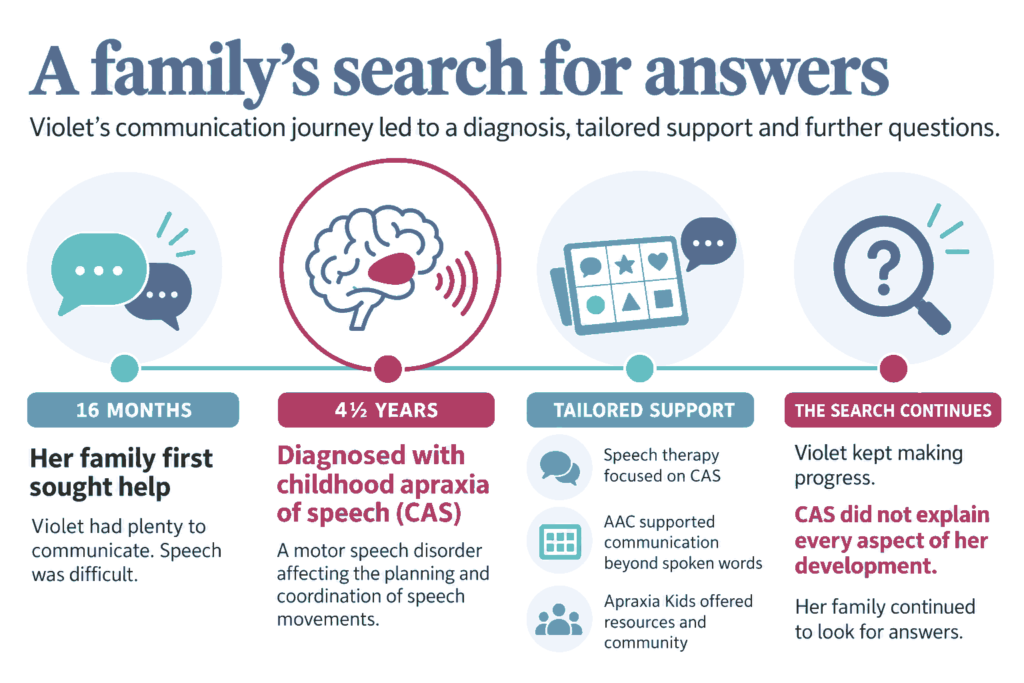
Violet has continued to make progress with support tailored to her communication needs. Her family describes her as sweet, vibrant and full of personality. She enjoys playing with other children and wants to participate in the everyday experiences that matter to her.
Yet the diagnosis of childhood apraxia of speech did not explain every aspect of her development. Her family continued to look for answers.
“What began as a way to help Violet's classmates understand her has become an opportunity to help more families, schools and communities understand rare disease and communication differences.”
At six, Violet underwent more comprehensive genetic testing. The results identified Skraban-Deardorff syndrome, also known as WDR26-related disorder, an ultra-rare genetic condition associated with developmental differences and a range of neurological and physical features.
The condition can affect speech, learning, muscle tone, movement and feeding. Seizures are also common, although experiences vary considerably between individuals. Skraban-Deardorff syndrome is associated with disease-causing changes in the WDR26 gene, and most reported cases result from a new genetic change rather than one inherited from a parent.
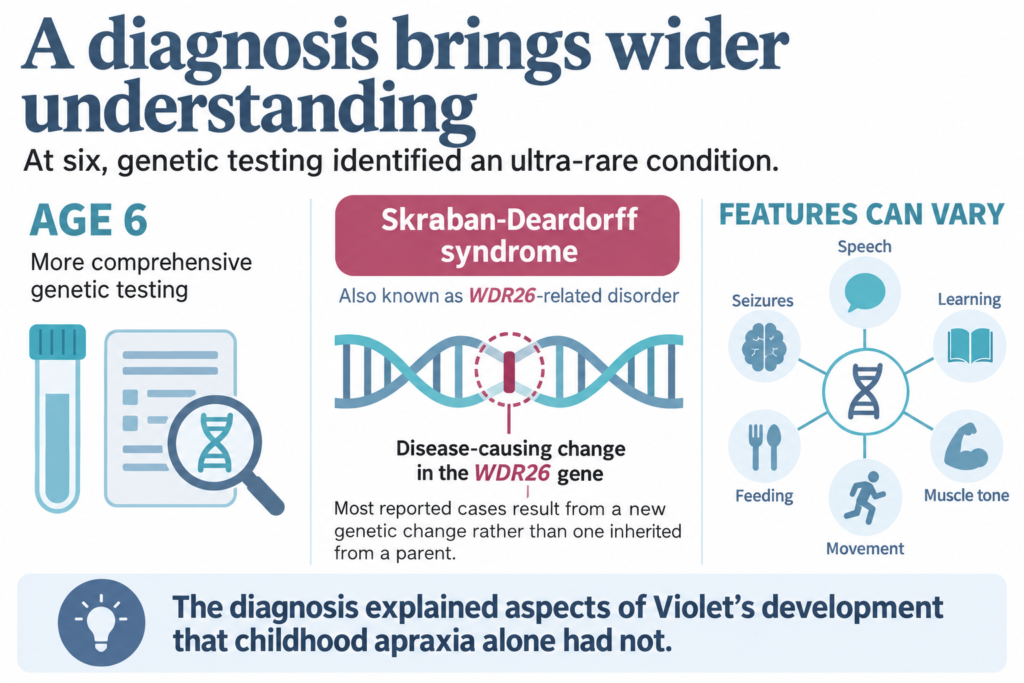
For Violet’s family, the diagnosis provided a broader explanation for aspects of her development that childhood apraxia alone had not accounted for.
It also introduced them to a rare disease community in which families, clinicians and researchers are still building knowledge about the condition.
For many families affected by rare diseases, reaching a diagnosis can be a long and uncertain process. Some receive several diagnoses before the wider picture becomes clear. Others may spend years seeking an explanation for symptoms that do not fit neatly into a single clinical description.
Violet’s experience illustrates why appropriate assessment, access to relevant expertise and awareness of rare genetic conditions matter. A diagnosis does not answer every question, but it can help families find condition-specific information, connect with others and explore appropriate support.
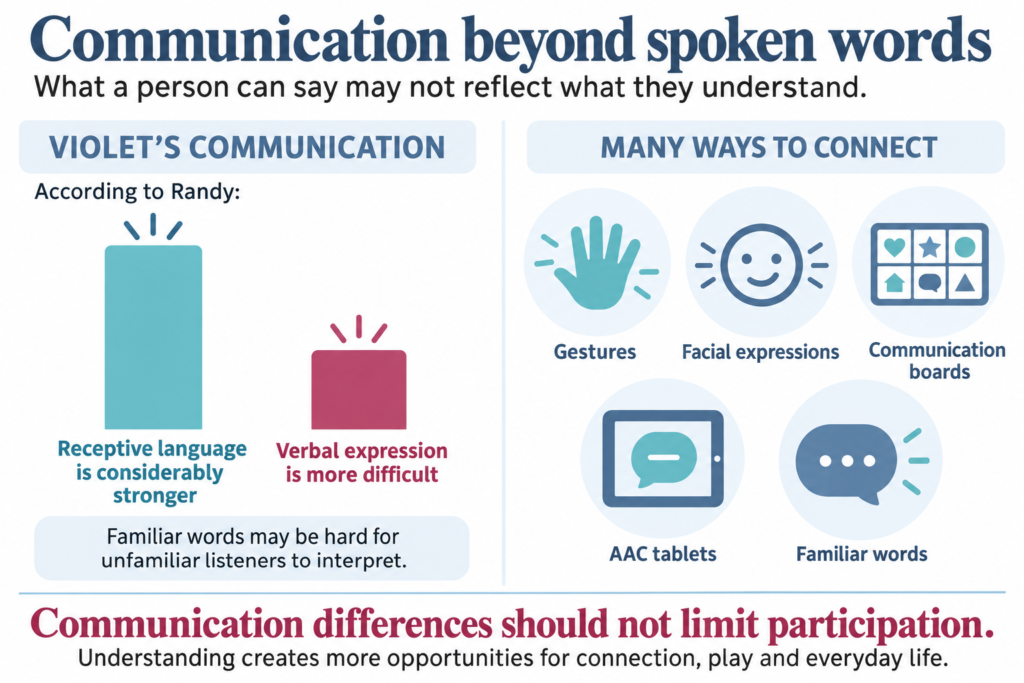
One of the most important aspects of Violet’s story is the distinction between what she can say and what she understands.
According to Randy, Violet’s receptive language is considerably stronger than her ability to express herself verbally. She may use familiar words in ways that are difficult for people who do not know her to interpret. Her communication needs, however, do not diminish her desire to connect with others or take part in everyday life.
This distinction matters well beyond Violet’s experience.
Spoken language is only one way people communicate. Gestures, facial expressions, communication boards, AAC tablets and other tools can help individuals express preferences, share information and participate in social settings.
When communication differences are misunderstood, people can be underestimated or excluded. When families, educators and peers learn to recognise different ways of communicating, they can create more opportunities for participation.
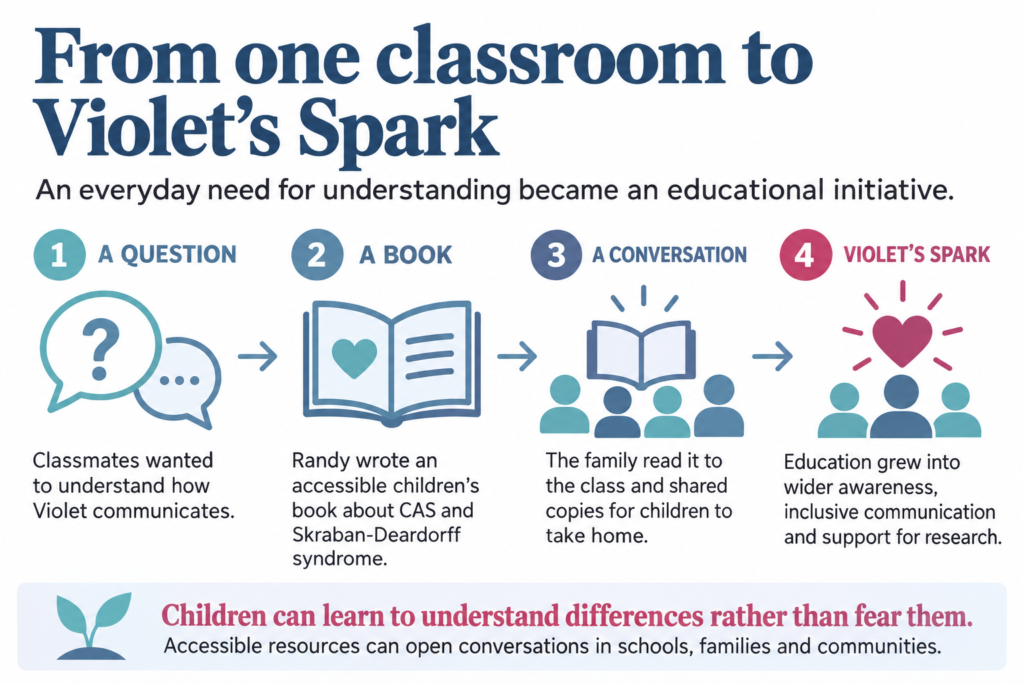
Randy saw this first-hand while volunteering in Violet’s classroom. Her classmates wanted to understand her, and their parents had questions about her condition that they did not always know how to ask.
He recognised an opportunity to make the unfamiliar easier to understand.
Randy began writing an educational children’s book to help Violet’s classmates understand childhood apraxia of speech and Skraban-Deardorff syndrome.
He and his wife read the book to the class and provided copies for families to take home. This gave children and parents an accessible way to continue the conversation beyond the classroom.
The initiative grew into Violet’s Spark, an organisation focused on illuminating the beauty of creative communication while supporting rare disease research and speech therapy foundations.
Its educational resources help introduce children and communities to different communication methods and encourage greater understanding of rare conditions. Its Education Hub provides another route for families, schools and communities seeking information.
The idea behind the initiative is straightforward: children should have opportunities to understand differences rather than fear or misunderstand them.
For Violet, this means creating an environment in which her classmates can learn how she communicates and how they can include her in play. For other families, accessible educational resources can offer a starting point for conversations that might otherwise feel difficult.
Randy’s experience demonstrates how family advocacy can emerge from an everyday challenge. A parent notices a gap in understanding, identifies a way to address it and creates something that may help others facing similar circumstances.
After more than 30 years working in construction, Randy retired and began dedicating his time to rare disease advocacy.
He immersed himself in scientific publications, conferences and the terminology of medical research, including natural-history studies, outcome measures, patient registries and potential therapeutic approaches.
His motivation was to understand what researchers need to learn about Skraban-Deardorff syndrome and how families might contribute to that work.
Randy is not seeking to replace clinical expertise. Instead, he is building the knowledge needed to engage with researchers, understand the questions facing the community and help ensure families are part of the conversation.
He has joined the board of the Skraban-Deardorff Syndrome Foundation, serving as chair of its development committee and contributing to its medical advisory work, as described in his account to Rare Disease Watch.
The foundation works to advance understanding of the condition through research, education and collaboration among families, clinicians and scientists. Its research programme includes work in neurodevelopmental assessment, basic science and drug discovery, alongside efforts to develop research resources and models that may support future investigations.
These activities are important steps towards improving scientific understanding. They should not be confused with an established treatment or an active clinical trial.
For families affected by an ultra-rare condition, research progress depends on many interconnected efforts: understanding the condition’s natural history, identifying and connecting affected individuals, developing meaningful outcome measures and establishing the evidence required to evaluate potential treatments.
Family participation can be valuable throughout this process. Lived experience can help researchers understand which aspects of daily life matter most, while families may contribute information that improves the overall picture of the condition.
Patient advocacy is not limited to campaigning or fundraising. It can include sharing experiences, improving public understanding, helping families find trusted information and contributing to conversations about research priorities.
Violet’s story highlights several ways that lived experience can make a difference.
Making rare conditions visible. When families share their experiences, they help others recognise that a condition exists and learn where to find reliable information. Greater awareness may also encourage more informed conversations between families and healthcare professionals.
Helping families navigate uncertainty. A diagnosis can open a route to condition-specific resources and peer communities. Family-led organisations can help people understand where to look for information while recognising that individual medical questions require qualified clinical advice.
Encouraging inclusion. Education can help classmates, teachers and wider communities understand that communication differences do not define a person’s interests, abilities or relationships.
Supporting research readiness. Connecting families and improving awareness of a rare condition may help research communities understand who is affected, identify gaps in knowledge and build the foundations needed for future studies.
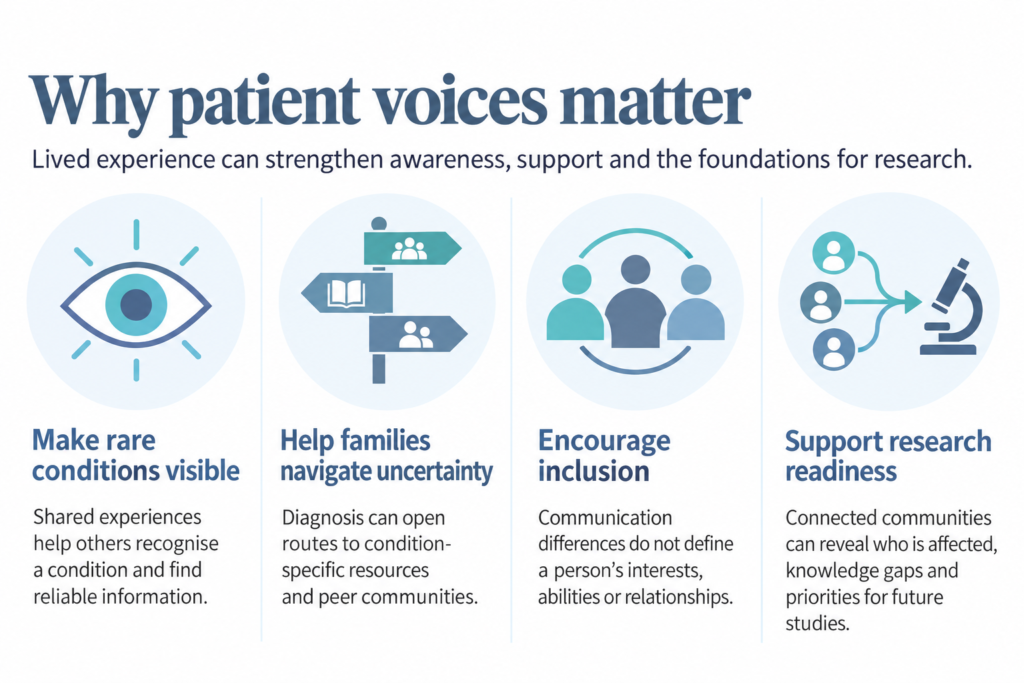
These contributions are complementary. Awareness alone cannot guarantee a diagnosis, better treatment or research funding. However, it can help create the conditions in which families are more visible, information is easier to find and collaboration becomes possible.
Skraban-Deardorff syndrome remains ultra-rare, and knowledge about its full range of features continues to develop. For families, this can mean navigating uncertainty while trying to understand what a diagnosis may mean for their child.
The Skraban-Deardorff Syndrome Foundation provides condition-specific information and details of its family, research and educational activities. Its work offers a route for families and professionals seeking a more detailed understanding of the syndrome.
Violet’s Spark complements this work through accessible awareness and education resources, particularly for schools, relatives and community members who may be encountering the condition for the first time.
Rare Disease Watch connects readers with organisations and resources through its directory listing for Violet’s Spark. Making these connections easier to find is part of a wider effort to reduce fragmentation and help families navigate the rare disease information landscape.
Each organisation has a distinct role. Condition-specific foundations provide specialist knowledge and research updates, while educational initiatives can help translate lived experience into accessible conversations within families, schools and communities.
Together, these approaches can help build a more informed and connected rare disease community.
Violet’s journey began with a family searching for answers about her communication. It has since become part of a wider effort to improve understanding of an ultra-rare condition and help others recognise the importance of inclusion.
Her story is not only about the challenges of obtaining a diagnosis. It is also about relationships, curiosity, family commitment and the ways that people can learn to understand one another.
For Randy, advocacy grew from a simple observation: Violet’s classmates wanted to connect with her, but they needed help understanding how.
His response was to create an opportunity for learning. Through Violet’s Spark and his involvement in the wider rare disease community, that experience now informs work intended to reach beyond one classroom.
At Rare Disease Watch, patient and family stories are an essential part of raising awareness. They bring lived experience into conversations that might otherwise focus only on diagnoses, symptoms and research terminology. They also remind us that every individual has a life beyond a medical record.
Patient voices matter because understanding a rare disease begins with understanding the people who live with it. By listening to families, sharing reliable information and recognising different ways of communicating, we can help build communities in which rare conditions are better understood and people are more readily included.
